FX60 vs FX76 ERW Tube Mill Model Comparison
FX60 and FX76 are medium-to-large ERW tube mill references for buyers planning round, square or rectangular welded tube production with larger dimensions and heavier wall requirements.
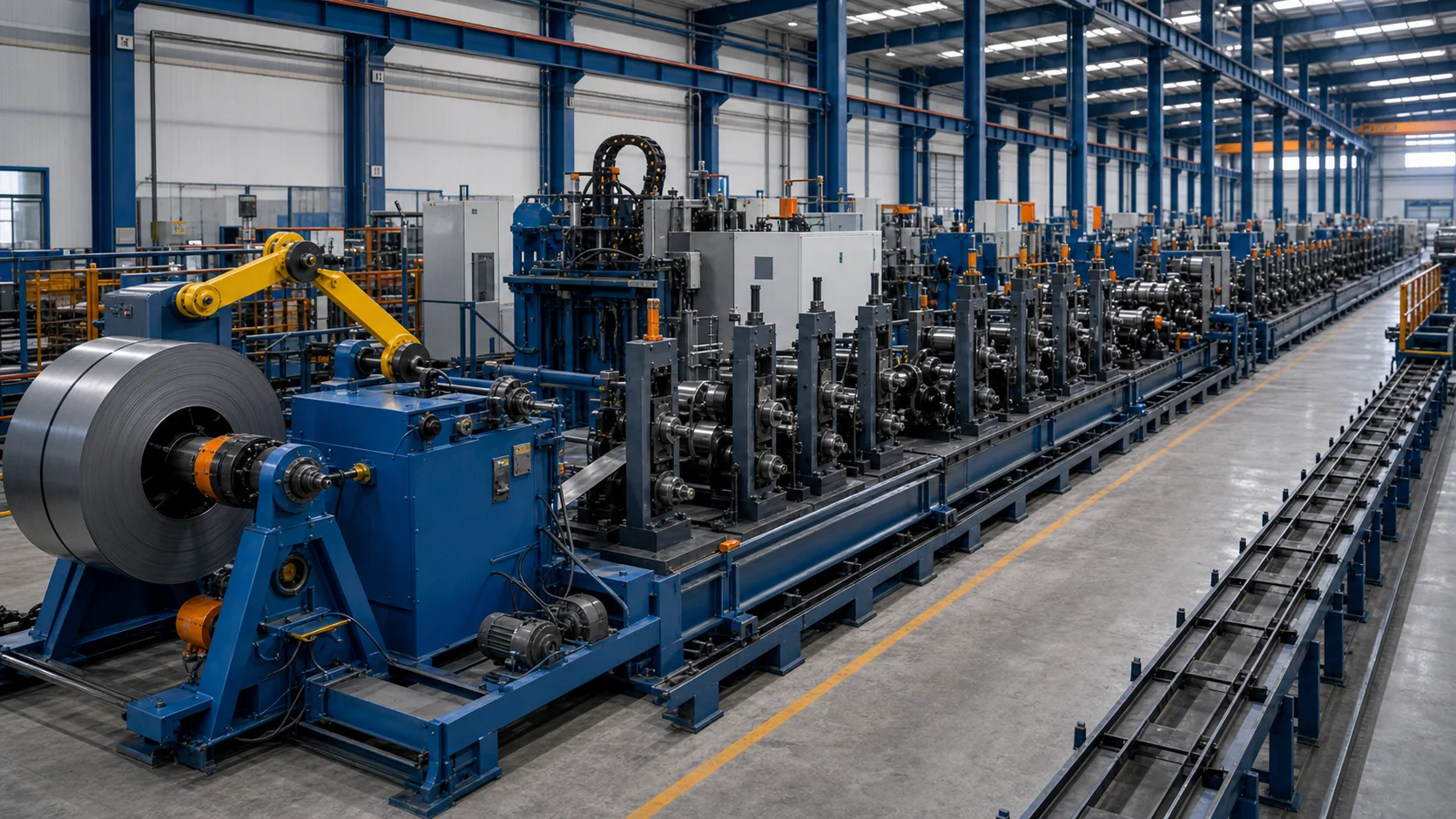
Model Family Overview
FX60 and FX76 are medium-to-large ERW tube mill references for buyers planning round, square or rectangular welded tube production with larger dimensions and heavier wall requirements. The page separates published technical reference data from project-specific engineering. It is intended to help buyers narrow the model family before a detailed technical discussion.
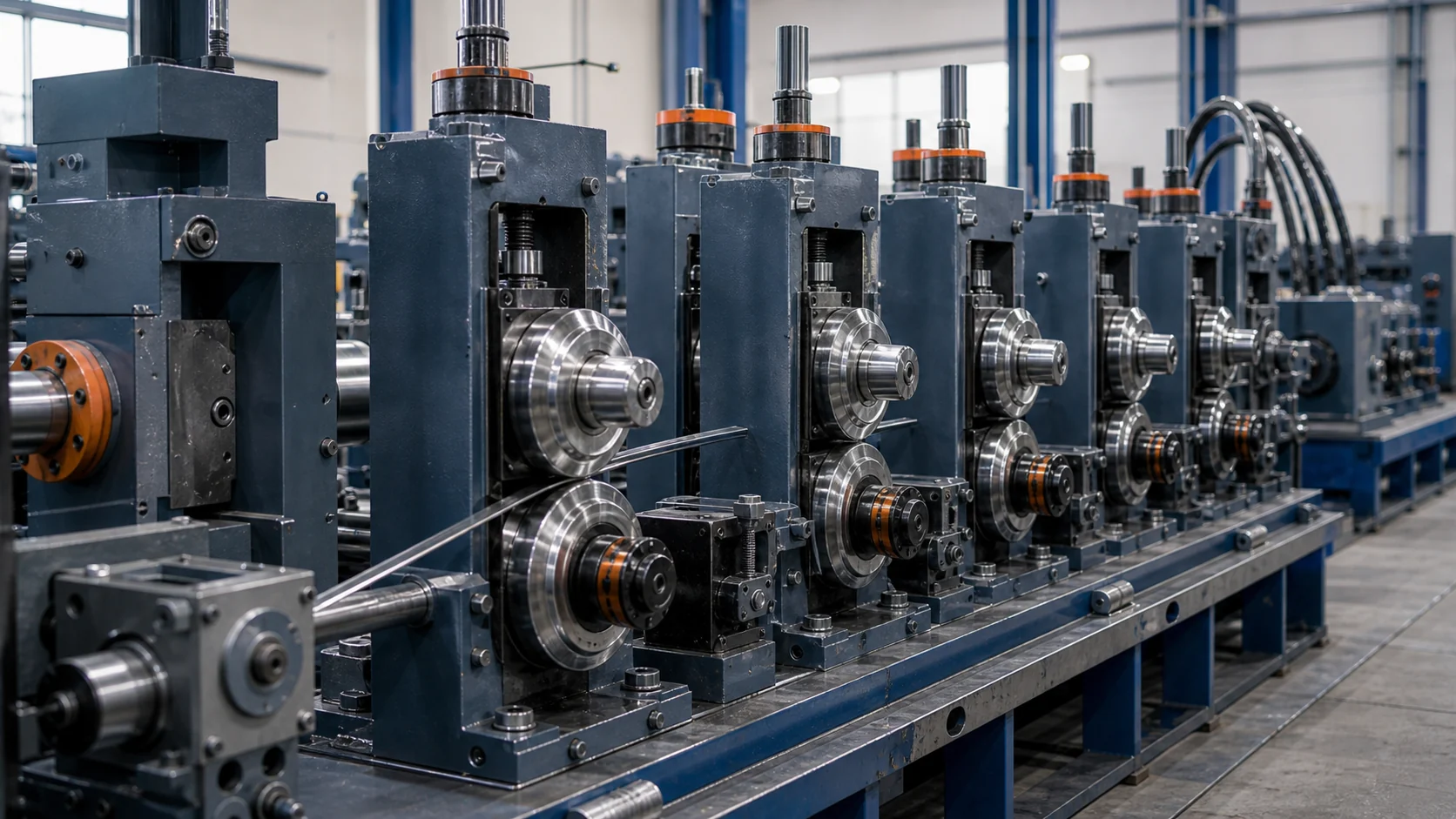
Published Reference XFX Technical Reference Table
Mobile: swipe the table left or right to see all columns.
| Model | Round tube OD (mm) | Round wall (mm) | Square tube size (mm) | Square wall (mm) | Main motor (kW) | HF welder (kW) | Speed (m/min) |
|---|---|---|---|---|---|---|---|
| FX60 | Φ25-89 | 0.8-3.5 | 20×20-70×70 | 0.8-3.0 | 160/185 | 250 | 30-90 |
| FX76 | Φ38-102 | 1.0-4.0 | 30×30-80×80 | 1.0-3.2 | 200/110×2 | 300 | 20-80 |
Source: XFX previously published technical reference data. Main motor values with a slash show alternative published reference configurations; the confirmed proposal and contract control the final configuration.
Application Fit by Model Family
FX60: medium structural production
A direction for medium round pipe and hollow sections where 89 mm round and 70×70 mm square published reference references cover the confirmed market.
FX76: larger structural sections
Moves the published reference family toward 102 mm round, 80×80 mm square and heavier walls, with greater attention to material flow and workshop planning.
Construction and machinery frames
Project suitability depends on material grade, section geometry, end condition and the proportion of heavier products.
Factory infrastructure
Coil loading, roll changes, foundations, run-out length and crane access become more important as product mass increases.
FX60 vs FX76: Match Medium and Larger Tube Requirements
FX60 and FX76 overlap across part of their published reference ranges, but the upper diameter, wall thickness and square-tube requirements separate the projects they are intended to address. Buyers should identify the heaviest product combinations before discussing line configuration.
FX60 reference
- Round: Φ25-89 mm, 0.8-3.5 mm wall
- Square: 20×20-70×70 mm, 0.8-3.0 mm wall
- Reference speed range remains higher than the published reference FX76 range
FX76 reference
- Round: Φ38-102 mm, 1.0-4.0 mm wall
- Square: 30×30-80×80 mm, 1.0-3.2 mm wall
- Extends the family toward larger and thicker welded products
Project questions that decide the line
- Which sizes carry the maximum wall thickness?
- How much production is round versus square or rectangular?
- What material grade and weld quality are required?
- What output and cutting requirements apply?
Operating Differences between FX60 and FX76
- Coil and strip handling: Confirm coil specification and lifting method because heavier strip affects entry equipment and safe loading.
- Mill alignment: A larger structural range increases the importance of foundation preparation, stand alignment and repeatable setup.
- Forming progression: Roll-pass design must control heavier material without forcing the section too quickly.
- Welding and cooling: The confirmed material and wall matrix guides welding, squeeze-roll and cooling discussion.
- Sizing and straightness: Larger hollow sections require attention to final geometry, twist and downstream support.
- Cutting and run-out: Product mass and length affect the flying saw, support tables, collection and packing plan.
Workshop and Equipment Planning by Model Family
FX60 planning focus
- Medium structural product mix
- Balanced floor-space requirement
- Round and 70×70 mm-class hollow sections
- General run-out and packing support
FX76 planning focus
- Larger and heavier sections
- Stronger coil and product handling
- Foundation and crane coordination
- Longer downstream support area
Factory Readiness Check before Model Selection
Layout and lifting
Provide workshop dimensions, door access, crane coverage and planned coil-loading direction.
Utilities and foundation
Share available voltage, power planning, cooling-water conditions and foundation constraints.
Downstream logistics
Explain how finished structural tube will be collected, inspected, packed and moved from the line.
Model Comparison FAQ
When should FX76 be compared with FX60?
Compare FX76 when larger round, square or thicker products are confirmed parts of the commercial plan, not merely possible future inquiries.
Does FX76 require more workshop planning?
Usually the larger product range increases attention to coil handling, foundations, run-out space and lifting. The exact layout depends on the selected configuration.
Can FX60 produce square and rectangular sections?
It can be discussed within the engineered range. Send every square and rectangular size with its wall thickness so the forming and tooling route can be reviewed.
What should be confirmed before comparing motor power?
Material grade, size-by-wall matrix, output target, forming route and line options should be confirmed. Published Reference power values are preliminary references only.
Related Models and Planning Resources
FX60 Tube Mill
Review the medium structural model profile.
FX76 Tube Mill
Review the larger structural model profile.
Tube Mill Auxiliary Equipment
Plan handling, finishing and downstream support around the mill.
Request Your Tube Mill Solution
Send your tube size list, wall thickness, material, capacity target, destination country, and factory voltage. XFX will review your requirements before recommending a practical machine configuration.