ERW Tube Mill Machine for Round, Square and Rectangular Steel Tubes
XFX configures ERW tube mill lines after reviewing the required tube sizes, wall thickness for each size, tube shape, material, production target, voltage, and workshop conditions. Final equipment, power, speed, cutting, tooling, and support scope are confirmed for each project.
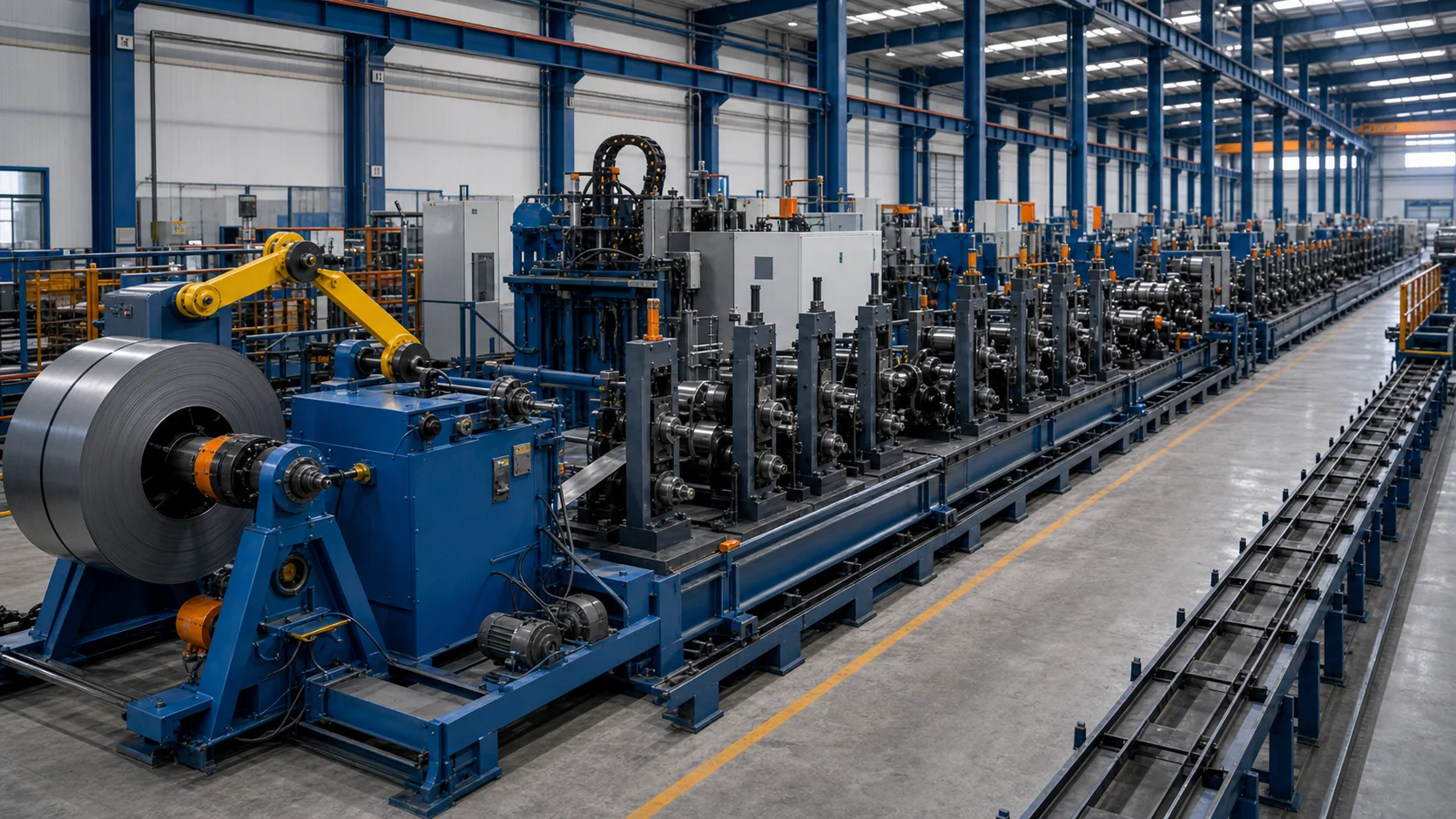
Quick Understanding
Use this summary to prepare an initial discussion. It is not a substitute for a project-specific technical proposal.
| Decision item | What the buyer should know |
|---|---|
| Tube shapes | Round, square, and rectangular requirements can be reviewed when the size and wall-thickness schedule is complete. |
| Material inputs | HR, CR, GI, PPGI, or another steel strip must be confirmed together with its grade and surface requirement. |
| Typical line stages | Decoiling, strip preparation, accumulation if selected, forming, high frequency welding, cooling, sizing, cutting, and run-out or packing. |
| Model selection | Determined from the full size-by-thickness list, product mix, material, production target, and factory conditions. |
| Final configuration | Requires XFX engineering confirmation before technical and commercial details are agreed. |
What an ERW Tube Mill Does
ERW means electric resistance welding. In a typical carbon steel tube mill, steel strip is gradually formed into an open round tube. The prepared strip edges are heated by the high frequency welding system and pressed together to create a continuous longitudinal weld seam.
After welding, the tube is cooled and sized before cutting and collection. Square and rectangular products may be formed from round tube or through another confirmed forming route, depending on the product mix and tooling design.
The complete line must be balanced. A larger diameter does not automatically require the same machine arrangement as a smaller tube with a heavier wall, a different steel grade, or a different speed target.
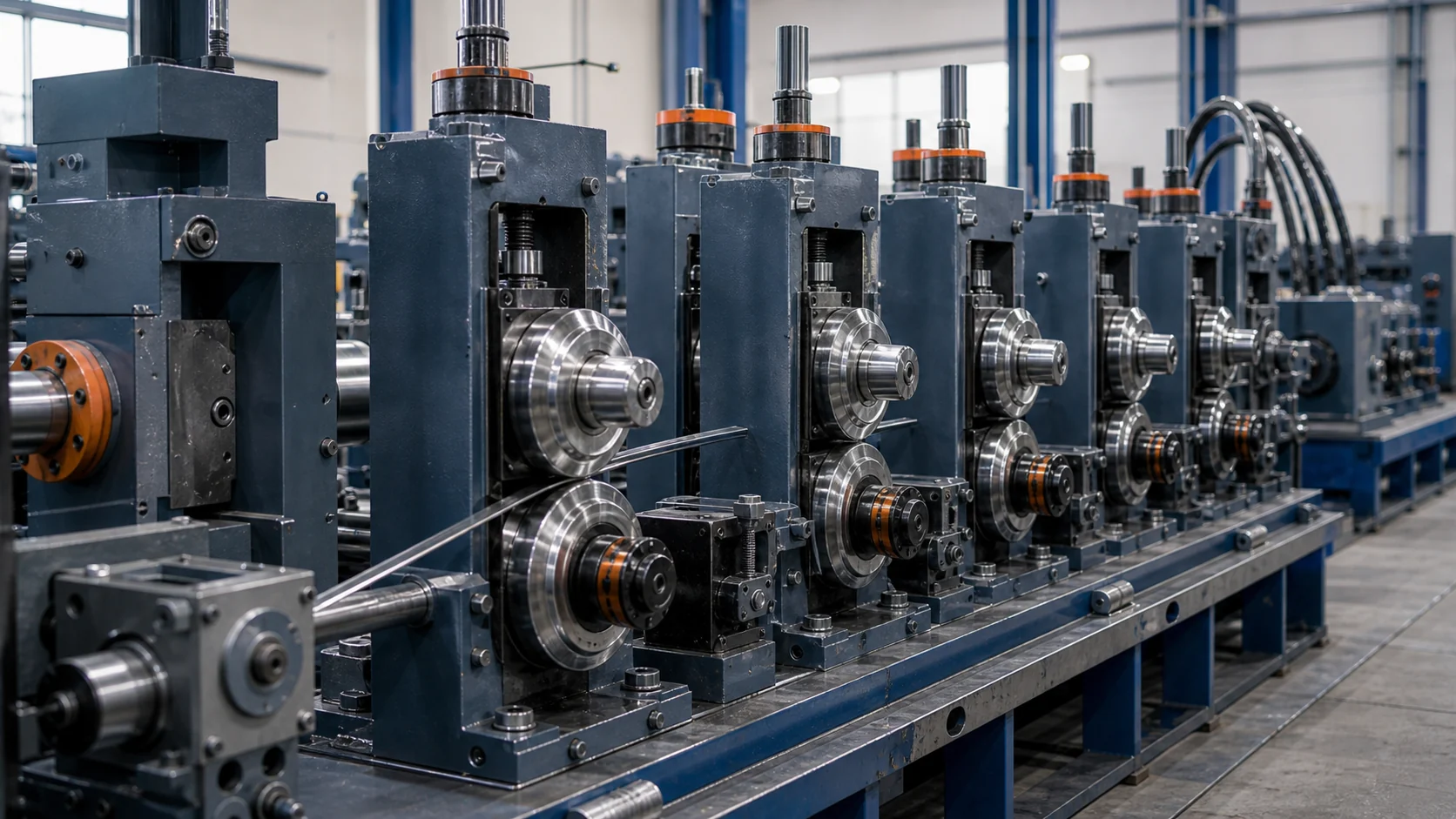
Six-Phase ERW Tube Mill Production Process
The line operates as a connected process. Equipment names and sequence can vary with the selected project configuration. Read the ERW tube mill production process guide for a section-by-section explanation.
Coil Entry and Strip Preparation
The steel coil is held and fed into the line. Strip guiding, leveling, and strip-end preparation depend on the selected configuration.
Accumulation
An accumulator may store strip so production can continue during coil preparation. Accumulator type and capacity are selected by project.
Forming
A sequence of roll stands gradually forms flat strip into the required open-tube geometry while controlling edge position and strip movement.
High Frequency Welding
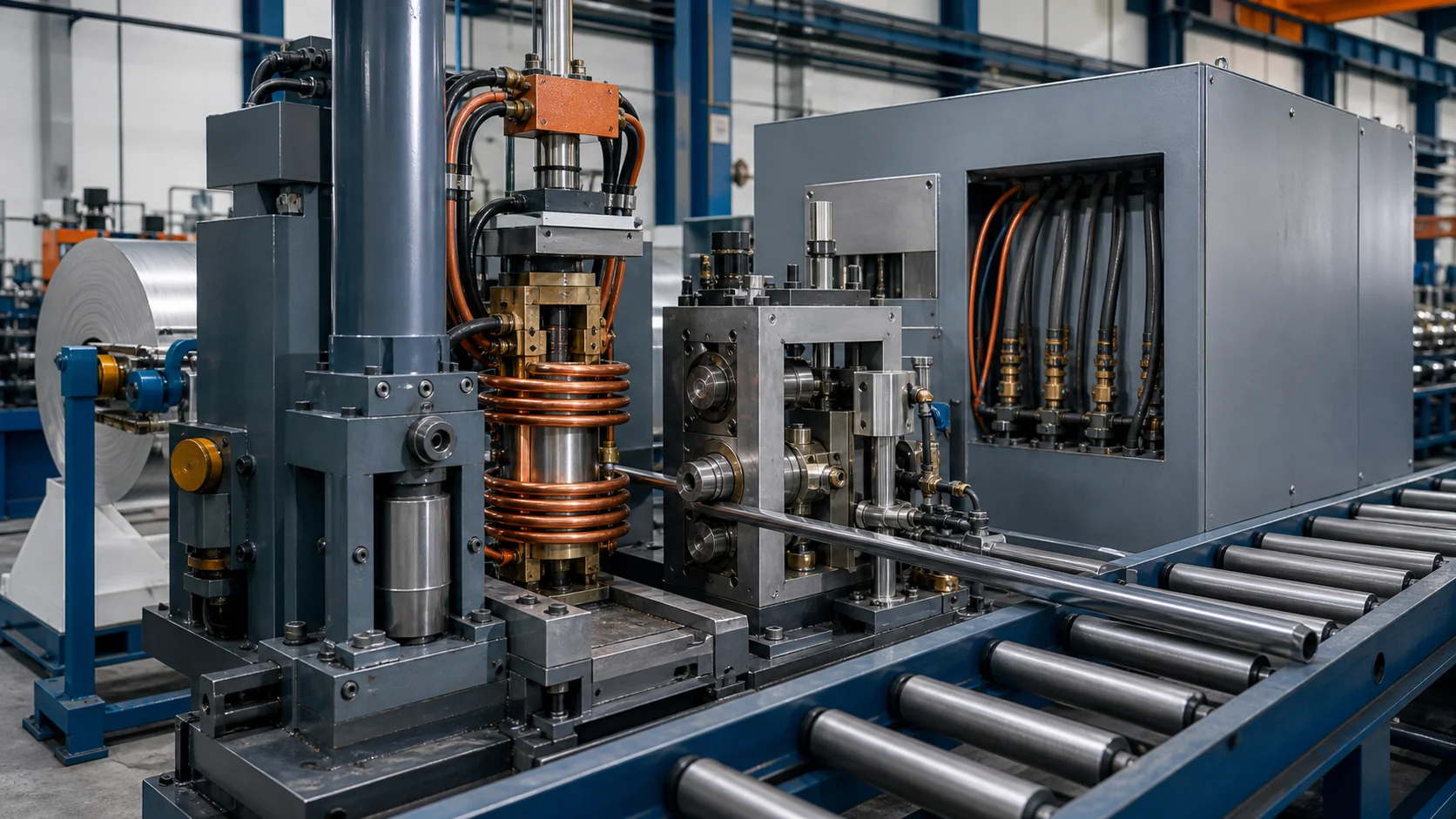
The prepared edges are heated and pressed together. Welding arrangement and settings depend on material, wall thickness, speed, and seam requirements.
Cooling and Sizing
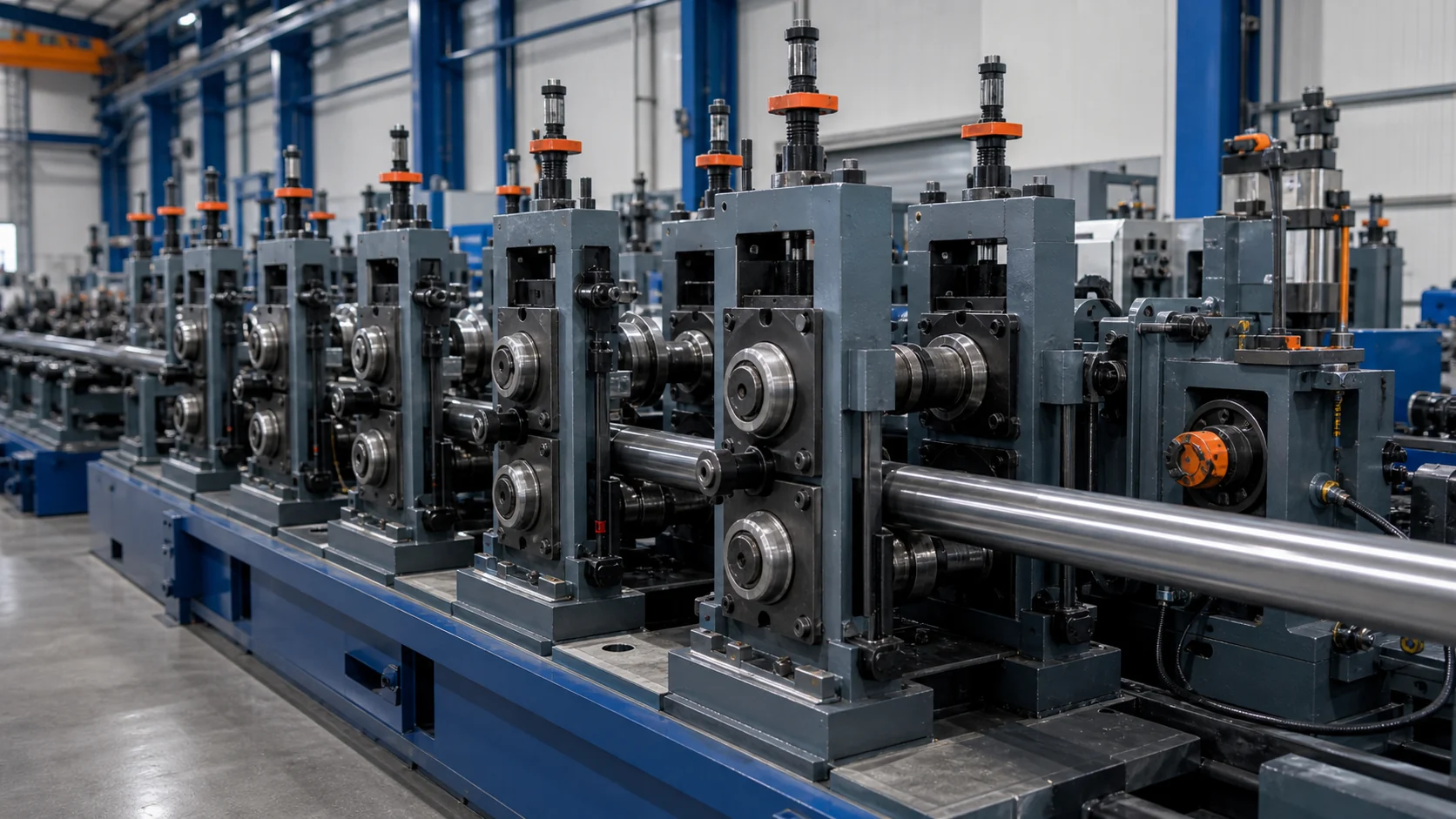
The welded tube is cooled and passes through sizing stands to control final dimensions, shape, and preparation for downstream cutting.
Cutting and Run-Out
The moving tube is cut to the required length. Run-out, collection, finishing, and packing arrangements are confirmed according to the production plan.
How to Select an XFX Tube Mill Model
Start with the complete order mix. Model selection should cover the practical size-by-thickness combinations, tube shapes, material behavior, tooling changes, welding requirement, cutting method, and factory layout.
Archived reference notice: The values below are archived XFX public reference ranges for preliminary model comparison. Final tube range, wall thickness, material condition, speed, power, configuration, and acceptance criteria require engineering confirmation for each project.
| Model | Round OD reference | Round wall reference | Square size reference | Square wall reference |
|---|---|---|---|---|
| FX16 | Phi 8-25 mm | 0.2-1.0 mm | 7×7-20×20 mm | 0.2-0.8 mm |
| FX25 | Phi 8-32 mm | 0.3-1.5 mm | 7×7-25×25 mm | 0.3-1.2 mm |
| FX28 | Phi 10-38 mm | 0.4-1.8 mm | 8×8-30×30 mm | 0.4-1.5 mm |
| FX32 | Phi 12-50 mm | 0.5-2.2 mm | 10×10-40×40 mm | 0.5-1.8 mm |
| FX45 | Phi 16-63 mm | 0.6-2.5 mm | 12×12-50×50 mm | 0.6-2.0 mm |
| FX60 | Phi 25-89 mm | 0.8-3.5 mm | 20×20-70×70 mm | 0.8-3.0 mm |
| FX76 | Phi 38-102 mm | 1.0-4.0 mm | 30×30-80×80 mm | 1.0-3.2 mm |
| FX89 | Phi 50-127 mm | 1.2-4.5 mm | 40×40-100×100 mm | 1.2-3.5 mm |
| FX114 | Phi 63-152 mm | 1.5-5.0 mm | 50×50-120×120 mm | 1.5-4.0 mm |
Compare Adjacent Model Families
Use these focused comparisons to narrow the practical model family before reviewing an individual model page:
FX16 vs FX25 · FX28 vs FX32 · FX45 vs FX50 · FX60 vs FX76 · FX89 vs FX114
Main Configuration and Project Options
A typical line may include the following stages. Inclusion, size, control method, and supplier scope are project-dependent.
| Line stage | Main function | Selection note |
|---|---|---|
| Uncoiler | Supports the coil and feeds strip into the line. | Selected from coil data and handling plan. |
| Strip preparation | Guides, levels, and may join strip ends for continued production. | Equipment depends on line configuration. |
| Accumulator | Stores strip between coil preparation and forming. | Type and storage requirement are project-specific. |
| Forming mill | Gradually forms strip into the welding geometry. | Stand design and tooling follow the product schedule. |
| HFW system | Provides energy for continuous longitudinal welding. | Power and arrangement require technical confirmation. |
| Cooling and sizing | Controls temperature, final dimensions, and tube shape. | Matched to round, square, or rectangular requirements. |
| Flying cut-off | Cuts the moving tube to specified lengths. | Cutting method depends on tube and production conditions. |
| Run-out and packing | Receives, transfers, collects, or packs finished tubes. | Manual and automatic options are discussed by project. |
Tube Shapes and Applications
ERW lines can be reviewed for round pipe as well as square and rectangular tube production. Typical applications include furniture tube, construction tube, structural hollow sections, general fabrication tube, and other longitudinally welded carbon steel products.
Application names do not determine the machine by themselves. Finished tube tolerances, surface expectations, end use, downstream finishing, and packaging should be discussed with the size and material schedule.
Information required for quotation
- Every round diameter and square or rectangular size
- Wall thickness matched to each size
- Steel grade, strip condition, and surface requirement
- Production target and expected shift plan
- Cut length, cutting method, and packing requirement
- Voltage, frequency, destination, and workshop layout
- Installation, training, and trial-running support needed
ERW Tube Mill Machine FAQ
Final answers depend on the confirmed tube program and project conditions.
Can one ERW tube mill produce round, square, and rectangular tubes?
It may be possible when the forming route, sizing stands, and roll tooling are designed for the confirmed shapes and size range. XFX reviews the complete product schedule before recommending a line.
Why is wall thickness needed for every tube size?
Wall thickness affects forming load, machine structure, tooling, welding, cutting, speed, and production stability. A single general thickness range is not enough for accurate selection.
Can GI or PPGI strip be used?
GI or PPGI may be reviewed when material properties, coating protection, forming route, welding conditions, and finished-tube expectations are confirmed.
What is the difference between ERW and high frequency welded tube mill?
ERW describes the resistance-welding process. In this market, high frequency welded tube mill commonly describes an ERW line using a high frequency welding system. Buyers should compare the complete line configuration.
What checks can be completed before shipment?
Checks can include raw-material, machined-part, welding, assembly, and electrical inspection, no-load testing, running trials, sample checks when suitable material is available, and packing inspection. The agreed scope varies by project.
Can XFX provide installation and operator training?
Depending on the project and destination, XFX can support installation guidance, commissioning communication, operator training, remote troubleshooting, and spare-parts coordination. Scope and responsibilities are confirmed before order or shipment.
Related Resources
Use these pages to continue from line selection to welding, model comparison, and project planning.
High Frequency Welded Tube Mill
Review the welding section, weld-quality factors, and information needed for HFW configuration.
Review HFW Tube MillFX Model Selection
Compare the individual FX model pages and understand why the complete order mix matters.
Compare ModelsTube Mill Projects
See how requirements, configuration, production, QC, delivery, and installation are organized.
View Project PlanningBuyer FAQ
Check common questions about quotation, machine selection, equipment, installation, and support.
Open FAQ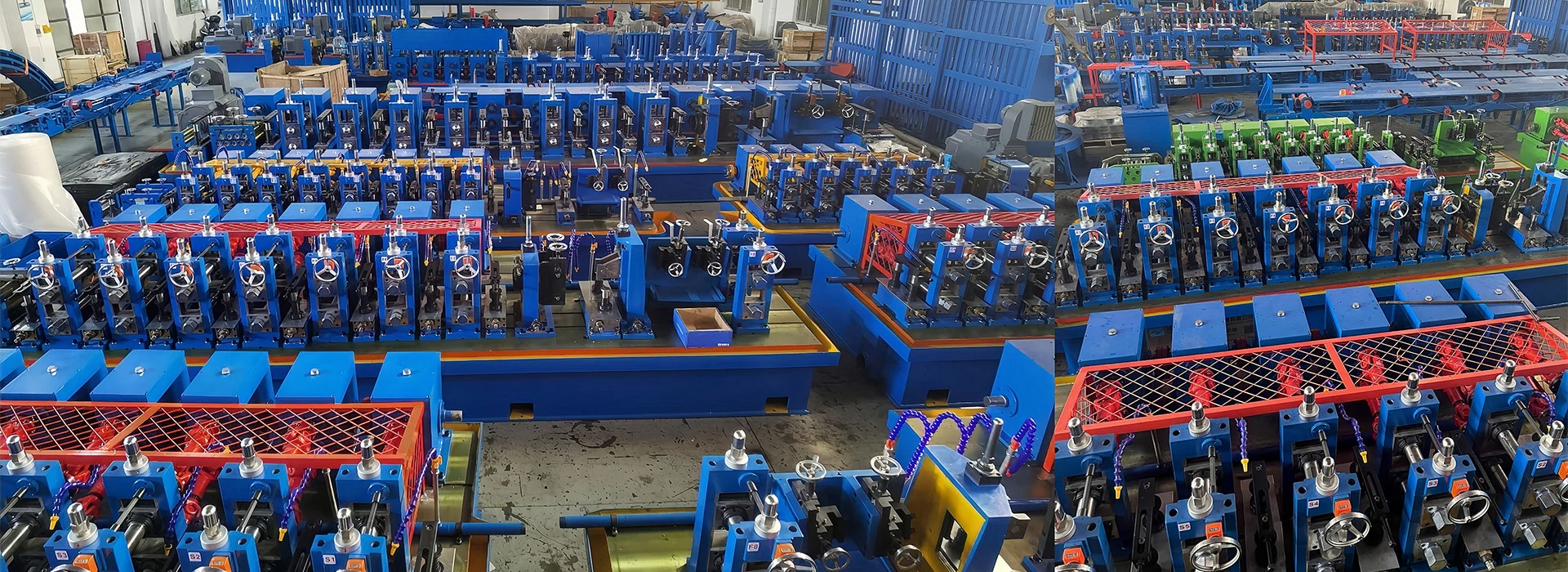
Discuss Your ERW Line with the Manufacturer
This is a real view from the XFX machinery workshop. A useful configuration discussion starts with the full tube size range, wall thickness for each size, material, output target, voltage, and available workshop layout.
Request Your Tube Mill Solution
Send your tube size list, wall thickness for each size, tube shape, material, production target, voltage, destination country, and workshop layout if available. XFX will review the information before discussing the line configuration.
Official company website: View official ERW tube mill product information.
Service scope is confirmed for each project. XFX can support installation guidance, operator training, remote technical communication, trial running under suitable conditions, pre-shipment checks, and spare-parts coordination. On-site support, buyer preparation, test scope, timing, and commercial responsibilities are agreed before order or shipment.