Tube Mill Machine Cost Guide for Steel Pipe Factory Buyers
Tube mill machine cost depends on tube size range, wall thickness, material, machine configuration, tooling quantity, automation level and installation requirements.
Why Tube Mill Machine Cost Is Not One Fixed Number
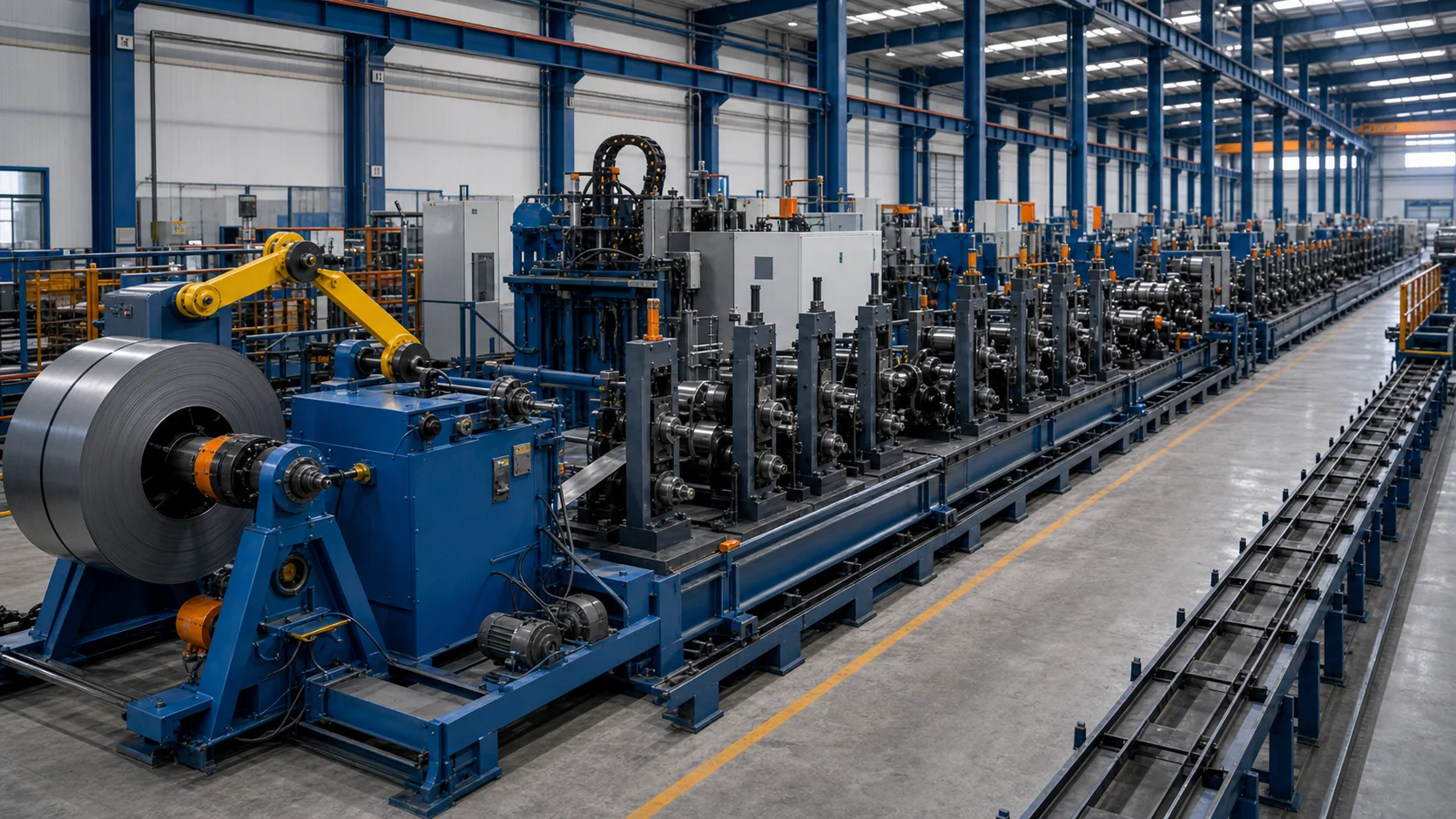
A tube mill machine is normally engineered around the buyer's product range. Unlike a standard spare part, the final cost depends on what pipe sizes you want to produce, what wall thickness you need, what material you will use, and how much production flexibility you expect from the line. A small pipe factory may need a compact ERW tube mill, while a structural pipe producer may need a stronger frame, larger forming section, higher welding configuration and more tooling.
For this reason, serious suppliers usually ask for technical information before sending a practical quotation. If a price is given before tube size, wall thickness and material are confirmed, that price may not represent the machine you actually need. XFX uses the quotation discussion to check the machine model, tooling plan, welding system, cutting method, layout direction and support requirements.
Main Cost Factors Buyers Should Check
- Tube size range: larger or wider ranges usually need a stronger machine platform.
- Wall thickness: thicker material affects forming load, welding power, cutting stability and line speed.
- Tube shape: round pipe, square tube and rectangular tube may require different tooling plans.
- Roll tooling quantity: more sizes mean more roll sets and higher tooling cost.
- Automation level: accumulator, flying saw, run-out and packing support affect investment.
- Installation support: overseas installation, training and commissioning should be included in planning.
Model Range and Cost Direction
For small tube production, buyers often compare FX28 tube mill. For stronger medium-small production, FX45 tube mill may be reviewed. For medium size pipe production, FX60 tube mill is usually a more relevant starting point. The model name alone does not decide the full price; the confirmed tube range and configuration decide the quotation.
| Cost Area | Why It Matters |
|---|---|
| Machine frame and forming section | Controls strength, stability and suitable tube range. |
| HF welding system | Must match material, wall thickness and welding requirement. |
| Tube mill rolls | Custom tooling affects forming accuracy and size change planning. |
| Auxiliary equipment | Supports continuous production, cutting, collection and packing. |
How to Prepare for an Accurate Quotation
Before requesting cost, prepare a tube size list. Include round pipe sizes, square tube sizes, rectangular tube sizes, wall thickness for each size, material type such as HR, CR or GI, production capacity target, voltage and destination country. If you already have a workshop drawing, send it together with the inquiry. This helps the supplier check whether one machine can cover the full range or whether another model direction is more practical.
You can start from the ERW Tube Mill Machine page or review all tube mill machinery products before contacting XFX. If your project is still early, the FAQ page explains what information is needed before quotation.
Investment Advice for New Steel Pipe Factories
New investors should not choose only by the lowest price. A low quotation can become expensive if the machine is too small, the tooling plan is incomplete, or installation support is unclear. A practical tube mill investment should balance price, stable production, spare parts, operator training and future product development. The best first step is to define the first product range that can create orders in your market, then select the line around that range.
Cost Review Checklist Before You Buy
When comparing tube mill machine cost, ask each supplier to explain what is included in the quotation. A useful quotation should make clear whether it includes the main mill, high frequency welder, uncoiler, accumulator, flying saw, run-out table, electrical control, hydraulic and pneumatic parts, roll tooling, spare parts, packing and installation support. If two quotations look very different, the reason may be configuration, not only price.
Buyers should also ask how many roll sets are included and which tube sizes those rolls cover. Roll tooling is often one of the areas where a low quotation hides future cost. If the first order includes only one or two roll sets, the buyer may need to purchase more tooling soon after installation.
How XFX Reviews Cost with Buyers
XFX normally starts by checking the pipe size list and wall thickness. Then the team reviews whether the proposed model has enough strength and whether the welding, sizing and cutting sections fit the target product. After that, layout and support requirements are discussed. This approach helps avoid a quotation that looks attractive but does not match actual production.
If you are building a new steel pipe factory, prepare a first-stage product range and a second-stage future product range. The first range helps control initial investment. The future range helps decide whether the selected line should reserve more flexibility. This is especially important for buyers in developing markets where product demand can change after the factory begins selling.
A practical cost discussion should end with a clear machine direction, quotation basis and list of information still requiring confirmation. This is better than receiving a fast number that cannot be used for real investment planning.
Send Your Tube Size
Send your tube size, wall thickness, material, capacity target and destination country. XFX will review the information and recommend a practical tube mill solution before quotation.
Send InquiryWhatsApp NowOfficial company website: Read the official tube mill cost factors guide.