High Frequency Welded Tube Mill for Steel Tube Production
A high frequency welded tube mill is an ERW production line that uses a high frequency welding system to heat and join prepared steel-strip edges. XFX reviews forming, edge preparation, welding, squeeze-roll arrangement, cooling, sizing, cutting, and operating conditions as one connected process.
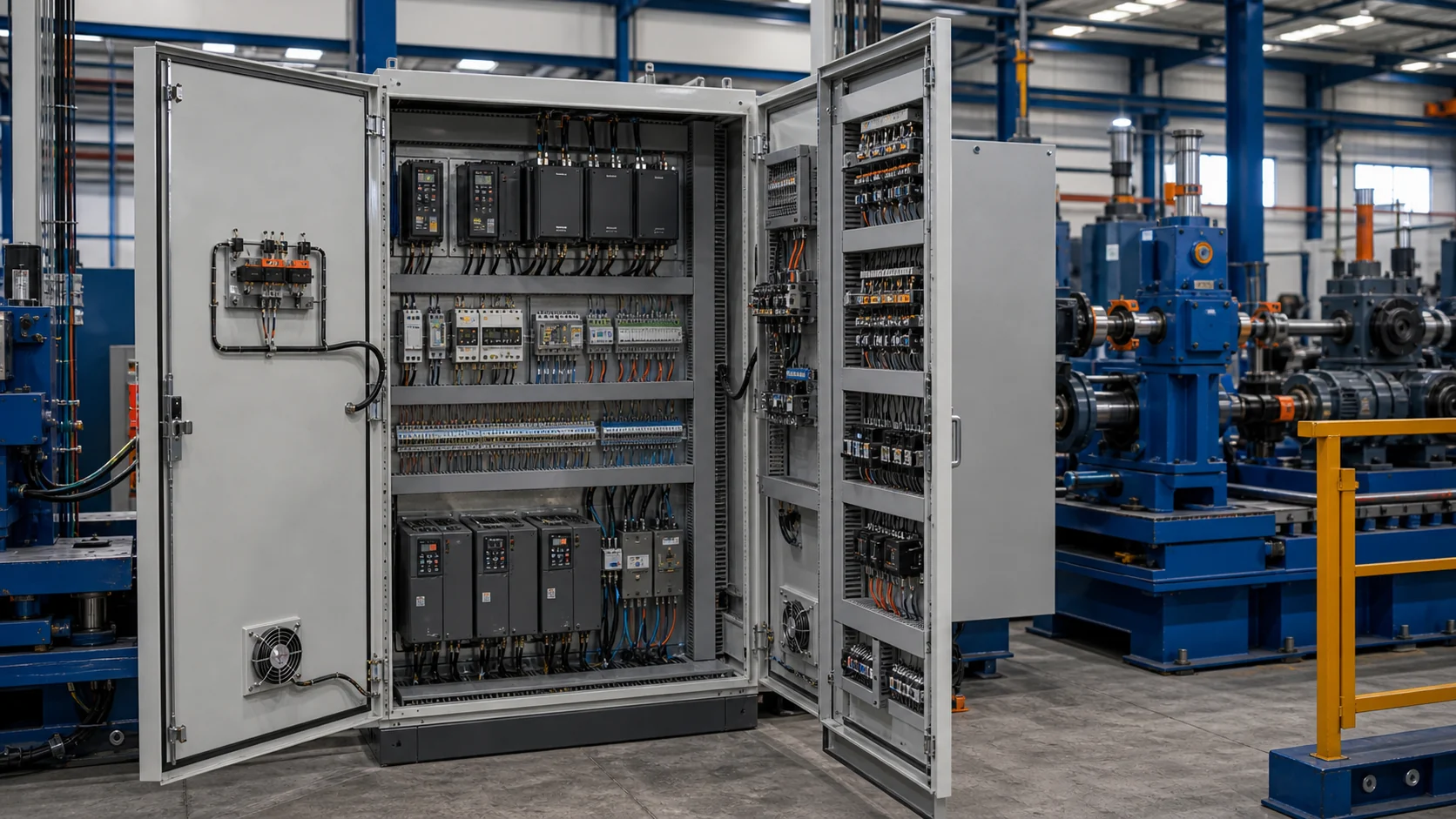
Quick Understanding
The welding system cannot be selected independently from the material, tube program, forming condition, and intended production plan.
| Decision item | Safe planning direction |
|---|---|
| Main purpose | Continuous longitudinal welding of formed carbon steel strip within an ERW tube mill line. |
| Material data | Steel grade, strip condition, surface, thickness, and edge quality must be confirmed. |
| Product data | Every tube size, matching wall thickness, tube shape, and weld-seam requirement should be supplied. |
| System selection | Welding arrangement and power are reviewed with forming, line speed, cooling, sizing, and factory utilities. |
| Final configuration | Requires project-specific engineering confirmation; no single power or frequency range is suitable for every line. |
ERW Tube Mill and High Frequency Welded Tube Mill Terminology
ERW refers to the electric resistance welding process used for welded tube production. Buyers often use the term ERW tube mill for the complete line from coil entry to finished tube collection.
High frequency welded tube mill usually emphasizes the welding method and the area around the welding point. It directs more attention to edge presentation, high frequency energy, squeeze rolls, seam treatment, cooling, and weld stability.
The two terms frequently describe closely related equipment. The practical comparison should be based on the complete configuration and the finished tube requirement, not only the product name.
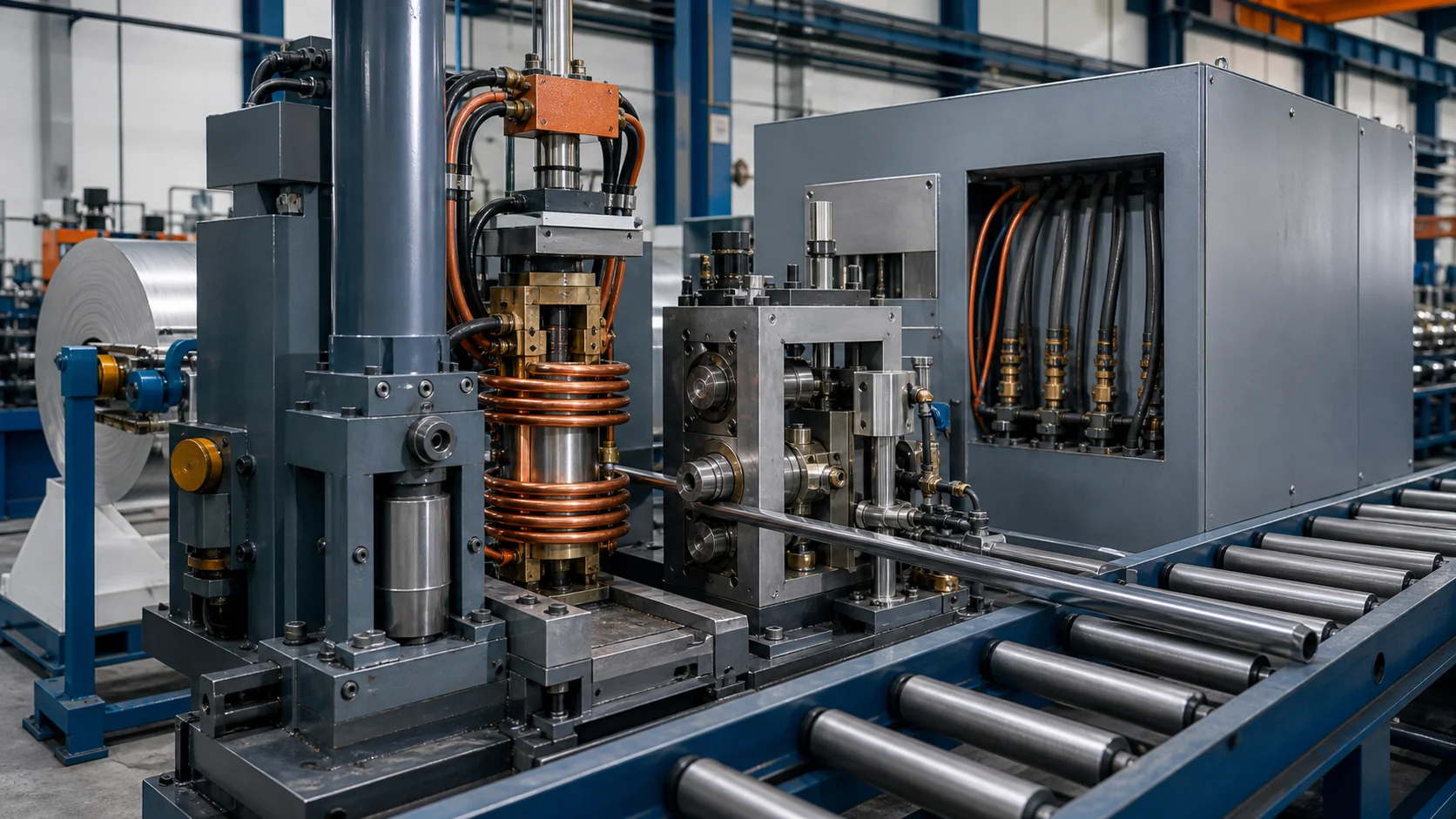
High Frequency Welding Section Architecture
These functions work together. Exact equipment, adjustment method, and supplier scope are confirmed for the individual line.
Forming Section
Gradually forms steel strip and prepares the two edges so they approach the welding point with suitable position and stability.
High Frequency Welding System
Supplies high frequency energy to heat the prepared strip edges before they are pressed together.
Squeeze Rolls
Apply controlled mechanical pressure at the welding point so the heated edges join and form a continuous seam.
Weld Seam Treatment
External or other scarfing arrangements may be included when the finished tube requires weld-bead removal or control.
Cooling Section
Reduces tube temperature after welding and prepares the product for stable downstream dimensional control.
Sizing Section
Controls final tube dimensions and shape after welding, including confirmed round, square, or rectangular requirements.
Factors Affecting Weld Seam Quality
Weld consistency depends on upstream material and forming as well as welding settings and downstream cooling. It is not controlled by one machine value alone.
| Factor | Why it matters | Information or control needed |
|---|---|---|
| Material and strip quality | Steel properties, surface condition, and consistency influence heating and forming behavior. | Confirm grade, strip condition, coating, and thickness. |
| Tube size and wall thickness | Each size-by-wall combination changes forming load and welding demand. | Supply a complete product schedule rather than one broad range. |
| Strip edge condition | Clean and consistent edges help the two sides meet predictably at the welding point. | Review slitting quality and strip preparation. |
| Forming accuracy | Stable edge position supports consistent entry into the welding and squeeze-roll area. | Review roll design, alignment, setup, and maintenance. |
| Welding configuration | Energy delivery must match material, wall thickness, line condition, and production target. | Final arrangement and power require XFX technical review. |
| Squeeze-roll adjustment | Position and pressure influence joining at the welding point. | Provide suitable adjustment, inspection, and operator procedure. |
| Line speed and cooling | Heating, squeeze pressure, cooling, and downstream sizing must remain coordinated. | Confirm the practical production target and quality requirement. |
| Operation and maintenance | Alignment, roll condition, inspection, and routine care continue to affect production. | Prepare operator training, maintenance, and troubleshooting plans. |
Information Needed for Welding Configuration
- Tube diameter or side dimensions for every product
- Wall thickness matched to each tube size
- Tube shape and finished weld-seam expectation
- Steel grade, strip condition, coating, and surface requirement
- Target production plan and expected shift arrangement
- Factory voltage, frequency, utilities, and workshop layout
- Current process problem if the inquiry concerns a line upgrade
QC, maintenance, and support
Checks can include material confirmation, machined-part and assembly inspection, electrical inspection, no-load testing, running trials, weld-seam or tube-sample checks when suitable trial material is available, and packing inspection.
For ongoing production, buyers should plan routine inspection of rolls, alignment, guides, squeeze-roll condition, cooling, electrical systems, and welding setup. XFX can provide remote technical communication, training discussion, and spare-parts coordination according to the agreed project scope.
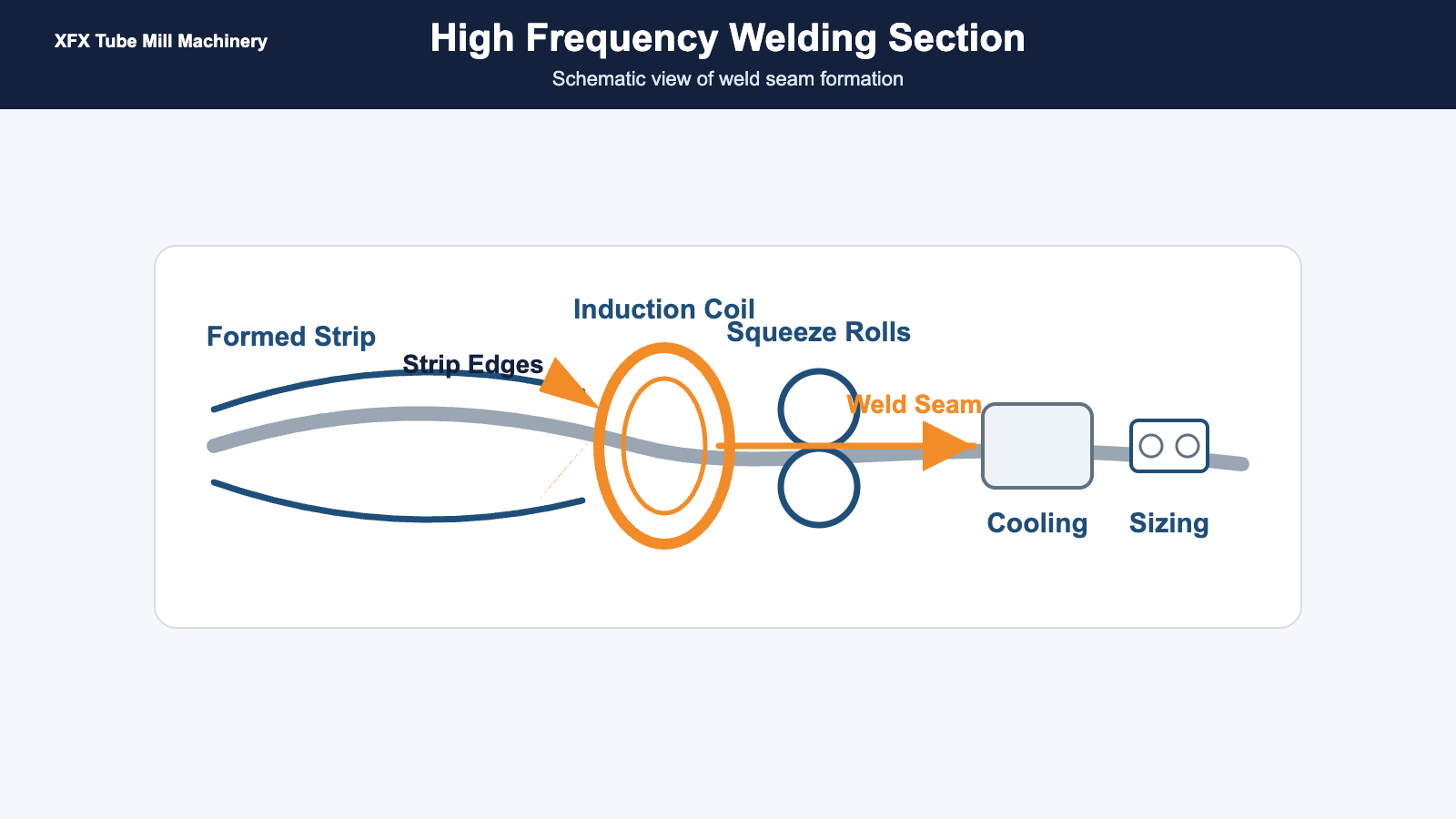
High Frequency Welding Technical Diagram
The diagram provides a simplified process view. It does not represent a fixed machine configuration, power value, or contractual line arrangement.
High Frequency Welded Tube Mill FAQ
These answers describe general selection logic. Final settings and configuration require project review.
Is a high frequency welded tube mill the same as an ERW tube mill?
The terms are often used for closely related equipment. ERW commonly describes the complete resistance-welded tube line, while HFW emphasizes the high frequency welding method and the welding-section design.
How is welding power selected?
It depends on the confirmed tube sizes, wall thickness, material, intended production plan, line arrangement, and quality requirement. XFX does not use one fixed power value for every project.
Why does strip edge quality matter?
Consistent strip width and edge condition help the forming section present both edges predictably at the welding point. Poor slitting or damaged edges can increase setup and stability problems.
Can the line produce square and rectangular tubes?
Square and rectangular products may be reviewed when the complete forming and sizing route, tooling, size combination, and wall thickness are confirmed. The welding section is only one part of that decision.
What support is available for welding setup?
Depending on the agreed scope, XFX can support installation guidance, operator training, remote technical communication, troubleshooting discussion, trial running under suitable conditions, and spare-parts coordination.
Related Resources
Continue with the complete line, tooling, auxiliary equipment, or buyer-question route.
ERW Tube Mill Machine
Review the full production line from coil entry and forming to welding, sizing, cutting, and run-out.
View ERW Tube MillTube Mill Rolls
Understand the confirmed tube and machine information needed before forming and sizing rolls are prepared.
Review Roll ToolingAuxiliary Equipment
Review project-dependent equipment for accumulation, cutting, handling, finishing, and packing.
View Auxiliary EquipmentBuyer FAQ
Check questions about machine selection, quotation, installation, support, slitting, and roll tooling.
Read FAQRequest Your Tube Mill Solution
Send your tube size list, wall thickness for each size, tube shape, material, production target, voltage, destination country, and workshop layout if available. XFX will review the information before discussing the line configuration.
Official company website: View official high frequency tube mill product information.
Service scope is confirmed for each project. XFX can support installation guidance, operator training, remote technical communication, trial running under suitable conditions, pre-shipment checks, and spare-parts coordination. On-site support, buyer preparation, test scope, timing, and commercial responsibilities are agreed before order or shipment.