Tube Mill Rolls and Roll Tooling for Tubes and Sections
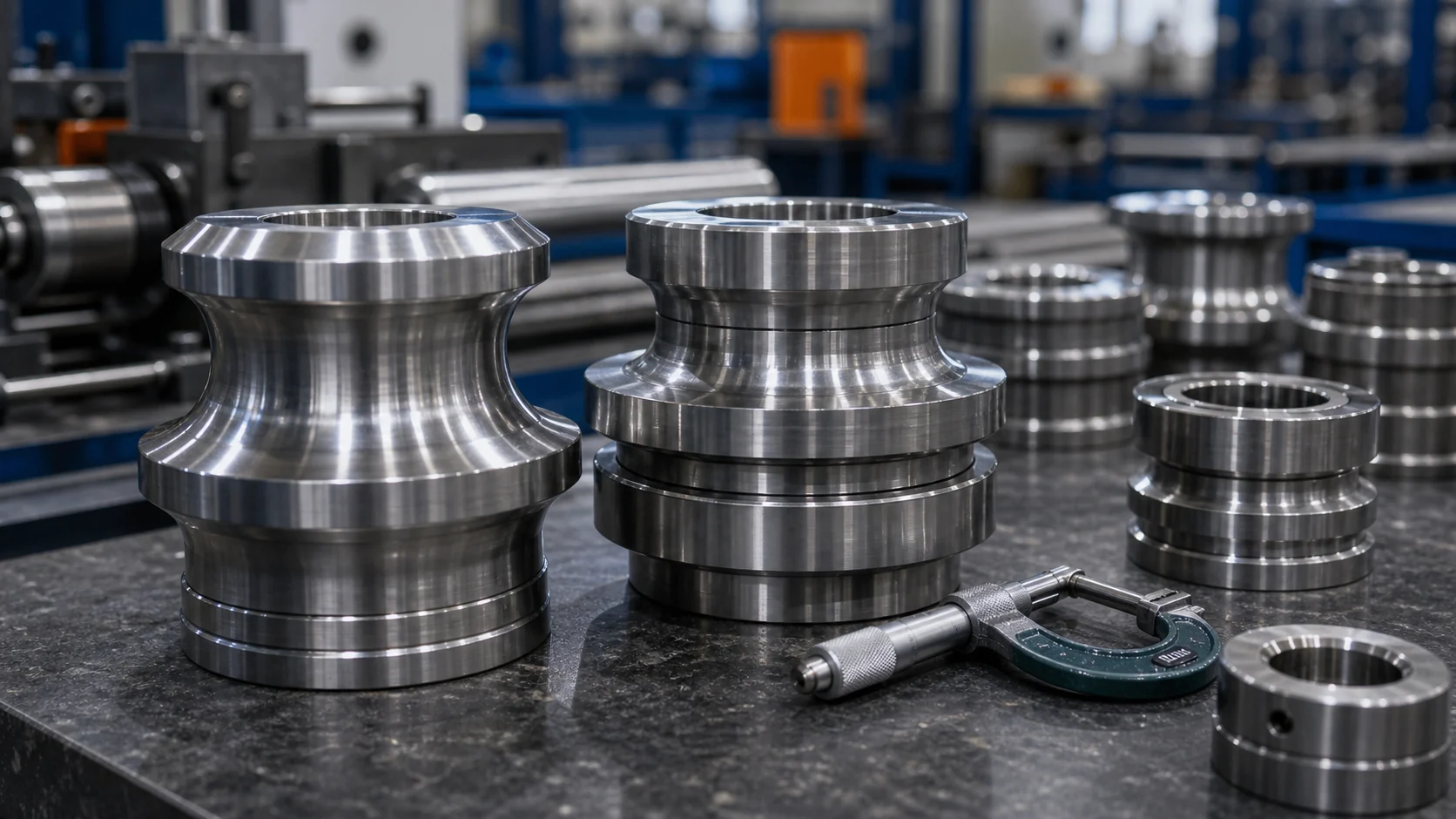
XFX designs new and replacement tube mill rolls and roll tooling for round, square, and rectangular welded tubes after reviewing the tube schedule, material, machine model, stand position, shaft and mounting data, existing drawings, sample parts, and current production problem.
Quick Understanding
Roll compatibility cannot be confirmed from tube size or a photograph alone.
| Decision item | What must be confirmed |
|---|---|
| Tooling purpose | New tube program, replacement set, individual damaged position, quality correction, or production upgrade. |
| Tube program | Tube shape, every size, matching wall thickness, material, and required product quality. |
| Machine interface | Machine model, stand number, shaft dimensions, mounting arrangement, spacers, keys, and neighboring roll relationships. |
| Reference evidence | Existing drawings, measured dimensions, marked photos, samples, or the complete roll set when available. |
| Final design | Geometry, material, heat treatment, finish, inspection, and acceptance details require technical confirmation. |
New Tooling and Replacement Tooling Are Different Jobs
The design starting point determines what evidence is needed and how compatibility is checked.
Tooling for a New Tube Program
The design begins with the complete tube and material schedule, machine arrangement, forming route, stand positions, shaft data, quality requirements, and changeover plan.
- Confirm every product size and wall thickness
- Confirm material and surface expectations
- Confirm machine and stand arrangement
- Agree design, manufacturing, and trial scope
Replacement Tooling for an Existing Mill
The new roll must match the actual machine interface and work with neighboring tooling. Model names alone may not identify the installed dimensions or previous modifications.
- Identify exact stand and roll position
- Measure shaft, bore, width, key, and spacer data
- Provide drawing, marked photos, or samples
- Explain wear, damage, or production problem
Compatibility warning: do not guess tooling compatibility. Send confirmed tube, machine, stand, shaft, and existing-roll information before design or quotation.
Roll Groups in a Welded Tube Mill
Roll names and positions vary by line design, but the tooling normally works as a connected system. A local change can affect strip movement, edge position, weld preparation, final dimensions, straightness, surface condition, and changeover behavior.
Forming Rolls
Gradually shape flat strip and control edge presentation before welding.
Welding and Squeeze Rolls
Support the tube geometry and controlled joining conditions around the weld point.
Sizing Rolls
Control final round, square, or rectangular dimensions and shape after welding and cooling.
Straightening and Guide Rolls
Support downstream movement, alignment, and finished-tube straightness where included.
Information Required Before Tube Mill Roll Design
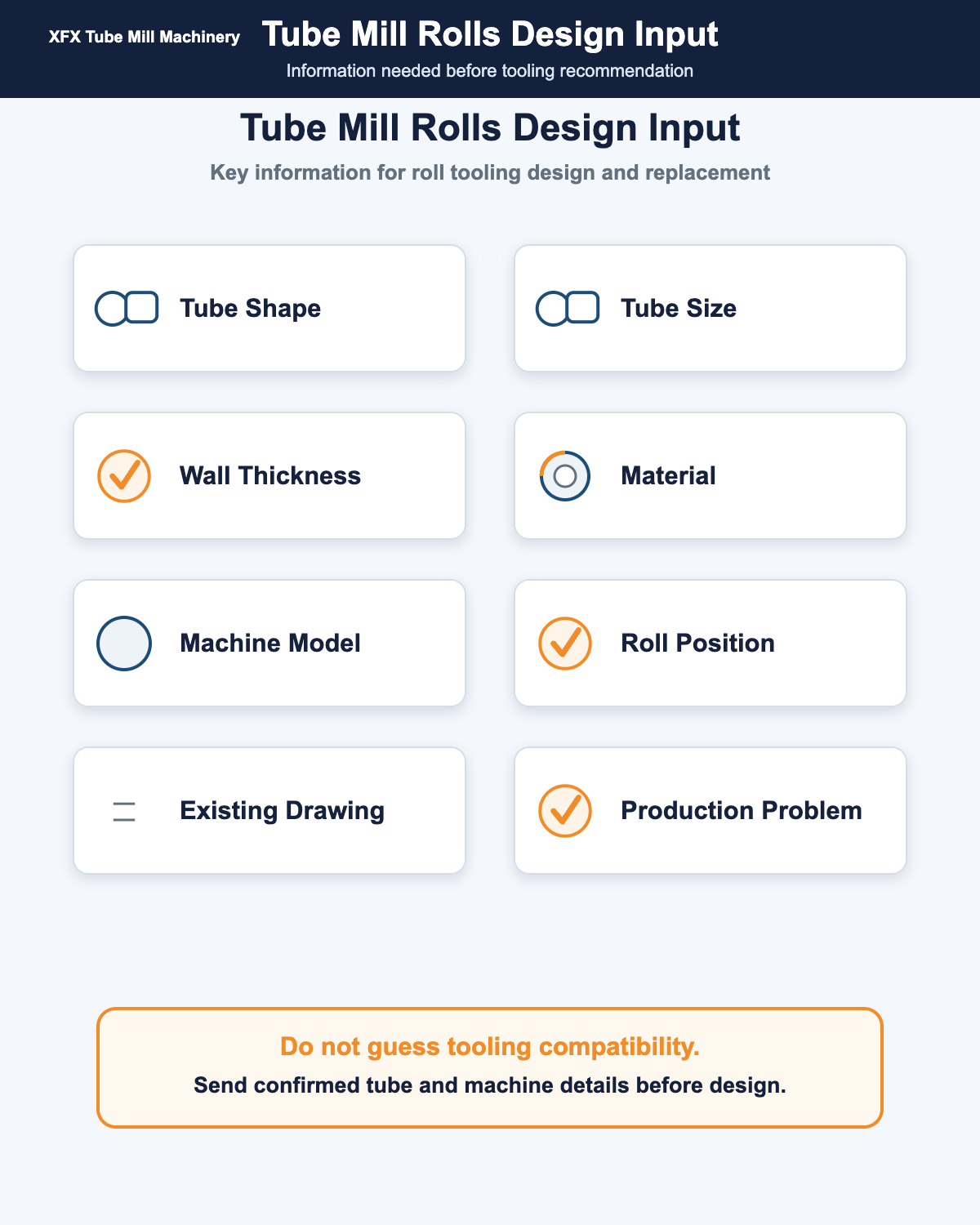
- Tube shape, every size, and wall thickness for each size
- Material grade, strip condition, and surface requirement
- Machine manufacturer, model, and available line drawing
- Stand number, roll position, and roll arrangement
- Shaft diameter, bore, keyway, width, spacers, and mounting data
- Existing roll drawing, measured sketch, marked photos, or sample
- Current production problem, damage pattern, or quality concern
- Expected replacement scope and required delivery sequence
Design, Manufacturing, and Inspection Focus
The agreed checks depend on the tooling scope, material, drawing status, and project requirements.
Geometry Review
Review roll pass relationships, tube progression, machine interfaces, and neighboring tooling.
Material and Process
Confirm tooling material, machining, heat treatment, surface finish, and handling requirements.
Dimensional Checks
Inspect the agreed bore, width, keyway, profile, runout, and mounting dimensions as applicable.
Traceable Communication
Mark drawings, roll positions, revisions, and buyer-approved information to reduce replacement errors.
Tube Mill Rolls FAQ
Accurate answers require confirmed tube and machine information.
Can rolls be quoted from tube size only?
No. Tube size does not confirm the machine interface, stand position, shaft, mounting arrangement, forming route, neighboring rolls, or required tooling scope.
What is needed for a replacement roll?
Provide the exact position, machine and stand information, measured dimensions, drawings or marked photos, neighboring-roll relationships, and the reason for replacement.
Can one roll set produce several tube sizes?
Coverage depends on the tooling design, tube schedule, material, line arrangement, quality requirement, and changeover plan. XFX must review the full range.
Can XFX help diagnose a production problem?
XFX can review confirmed photos, videos, dimensions, setup records, tooling condition, and production symptoms. A remote review may identify next checks but does not replace complete on-site evidence.
Can tooling be supplied with a new tube mill?
Yes, roll tooling can be discussed as part of a new tube mill project after the complete product schedule and machine configuration are confirmed.
Related Resources
Connect tooling design with the correct tube mill, shape requirement, production issue, and inquiry information.
ERW Tube Mill Machine
Review the complete forming, welding, sizing, cutting, and handling process around the roll tooling.
Review ERW Tube MillsSquare Tube Mill Machine
See the shape-control factors involved in square and rectangular tube production.
Review Square Tube MillsAuxiliary Equipment
Review line-support equipment for new installations, replacements, and production upgrades.
View Auxiliary EquipmentContact XFX
Send drawings, marked photos, measurements, and the tooling problem for technical review.
Start a Tooling InquiryRequest Your Tube Mill Roll Solution
Send your tube sizes, wall thickness, material, machine model, stand position, shaft and mounting data, drawings, marked photos, and current production problem. XFX will review the information before discussing tooling compatibility and scope.
Official company website: View official tube mill rolls product information.
Tooling scope is confirmed for each project. Material, heat treatment, drawings, inspections, trial conditions, packing, delivery, and technical support are agreed from the confirmed machine and tube information.