FX16 vs FX25 ERW Tube Mill Model Comparison
This comparison page helps buyers review the differences between FX16 and FX25 ERW tube mill model ranges for small welded steel tube projects. Use it to decide which single model page to review before asking XFX for engineering confirmation.
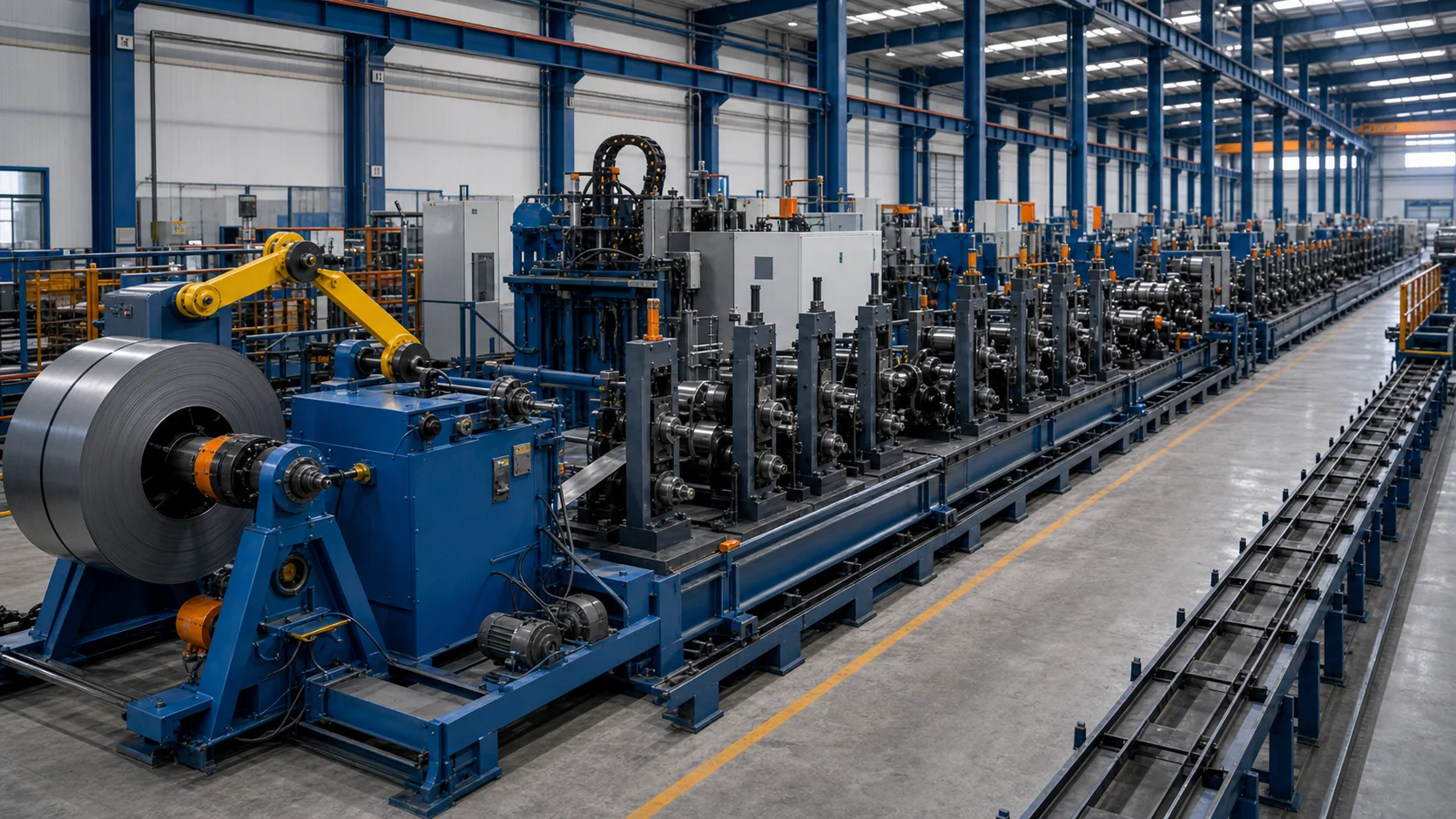
FX16 and FX25 Model Comparison Overview
This comparison page helps buyers review the differences between FX16 and FX25 ERW tube mill model ranges for small welded steel tube projects. Use it to decide which single model page to review before asking XFX for engineering confirmation.
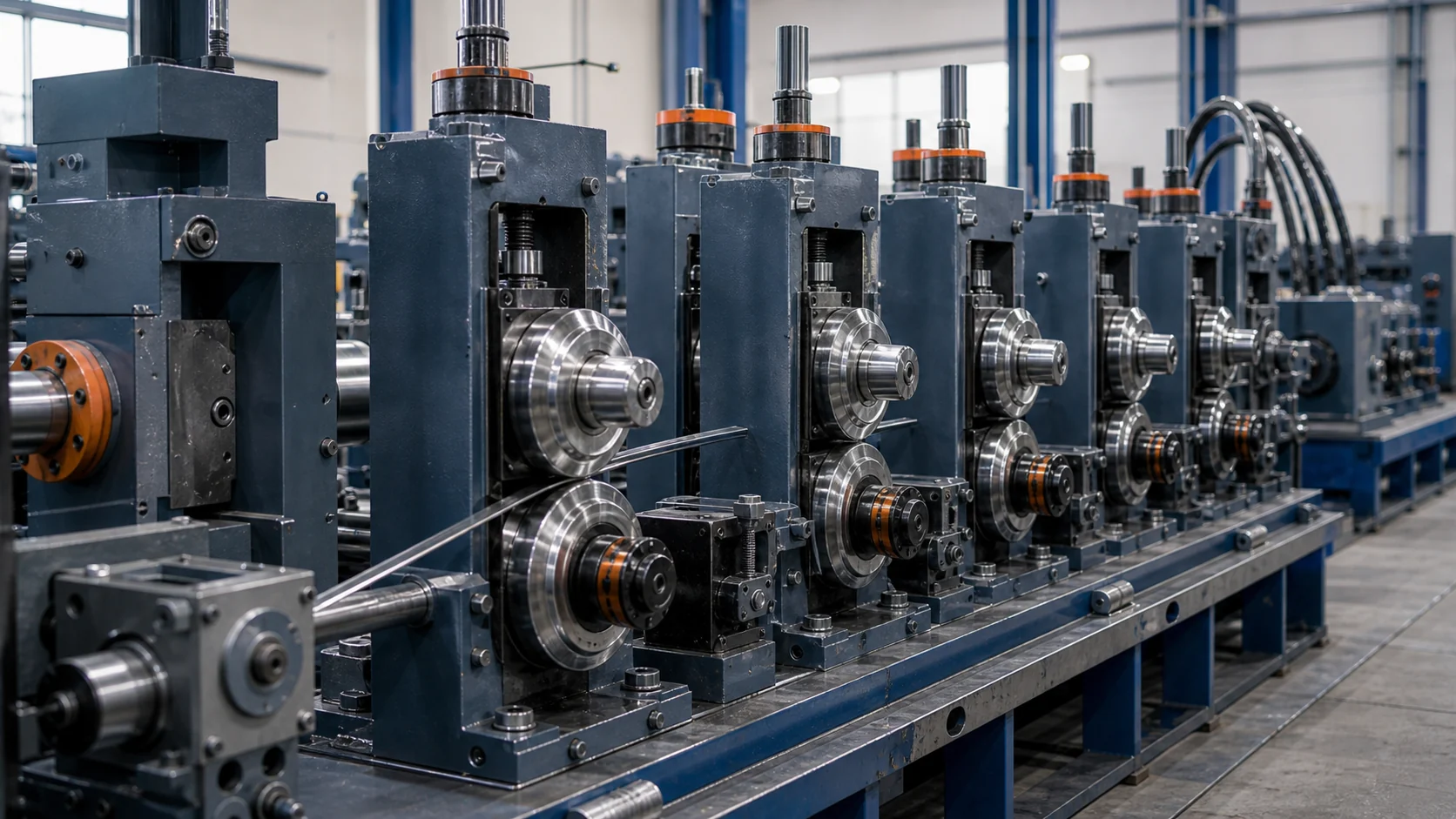
Published Reference XFX Technical Reference Table
Mobile: swipe the table left or right to see all columns.
| Model | Round tube OD (mm) | Round wall (mm) | Square tube size (mm) | Square wall (mm) | Main motor (kW) | HF welder (kW) | Speed (m/min) |
|---|---|---|---|---|---|---|---|
| FX16 | Φ8-25 | 0.2-1.0 | 7×7-20×20 | 0.2-0.8 | 22/30 | 100 | 40-120 |
| FX25 | Φ8-32 | 0.3-1.5 | 7×7-25×25 | 0.3-1.2 | 37/45 | 100 | 40-120 |
Source: XFX previously published technical reference data. Main motor values with a slash show alternative published reference configurations; the confirmed proposal and contract control the final configuration.
Application Fit by Model Family
FX16: precision small tube
Best discussed for a concentrated program of very small round tube and compact square tube where thin-strip guidance, surface handling and finished-tube support are central.
FX25: wider small-tube mix
Adds room for buyers who need more small-tube sizes, thicker products or 25×25 mm square tube while keeping the project in the compact-machine category.
Furniture and display products
Separate cosmetic, high-volume sizes from occasional fabrication sizes because roll finish, collection and changeover frequency influence the practical line plan.
Greenhouse and light fabrication
Confirm whether the work is dominated by thin repeat sections or includes heavier frame members that sit near the FX25 upper published reference reference.
FX16 vs FX25: Which Small Tube Mill Fits the Product List?
Both models overlap at the lower end of the published reference range, so the decision should be based on the complete size-and-thickness list rather than the largest diameter alone. The following points help buyers prepare an initial shortlist before XFX engineering review.
Consider FX16 when
- Round products remain within Φ8-25 mm
- Round wall thickness remains within 0.2-1.0 mm
- Square products remain within 7×7-20×20 mm and 0.2-0.8 mm
- The project is centered on compact, light-wall tube production
Consider FX25 when
- The list extends toward Φ32 mm round tube
- Round wall thickness reaches up to 1.5 mm
- Square products extend toward 25×25 mm and 1.2 mm wall
- The buyer needs more room above the FX16 published reference range
Do not decide from diameter alone
Material grade, every size-to-wall combination, required shapes, weld power, cutting method and output target can change the practical recommendation.
Small-Tube Production Priorities: FX16 vs FX25
- Narrow-strip entry: Coil braking and centering should feed light strip without sudden tension changes or lateral movement.
- Tooling plan: Frequent small sizes should be separated from occasional sizes so the roll-set scope remains practical.
- Controlled forming: Thin products require a gradual roll-pass sequence that avoids edge damage and unnecessary deformation.
- Weld-edge stability: HF welding and squeeze-roll position must be reviewed for the actual diameter-to-wall combinations.
- Light-tube cutting: Cutting and run-out equipment should limit bending, end deformation and impact marks.
- Changeover discipline: A mixed FX25 program may need more emphasis on access, roll storage and repeatable setup than a focused FX16 program.
Configuration Differences for a Small-Tube Workshop
FX16 configuration emphasis
- Narrow and thin strip control
- Compact tooling program
- Surface-sensitive collection
- Small finished-tube support
FX25 configuration emphasis
- More strip widths and roll sets
- Round-to-square product planning
- Changeover access and roll storage
- Cutting across a wider wall range
Quotation Preparation for Small-Tube Buyers
Identify cosmetic products
Mark furniture, display or coated products that need careful surface and collection handling.
Rank the size list
Show daily, weekly and occasional sizes so tooling quantity and changeover needs can be reviewed.
Confirm future expansion
List planned products above the current range before deciding whether FX16 or FX25 provides the better boundary.
Model Comparison FAQ
Is FX16 always the lower-cost choice?
Not necessarily. The practical choice depends on tooling quantity, material, cutting, automation and the real product mix. A focused FX16 line can be efficient for small products, while an overloaded specification can create avoidable complexity.
When should FX25 be compared instead of FX16?
Compare FX25 when important products approach 32 mm round, 25×25 mm square or the higher published reference wall references, or when future orders require a broader small-tube portfolio.
Which information matters most for thin-wall tube?
Send the tube diameter, matching wall thickness, material grade, strip surface and finished-tube use. Maximum diameter alone is not enough for forming and welding review.
Can one roll set cover every small size?
Roll-tooling scope depends on the confirmed product list and forming design. Do not assume universal compatibility; XFX should review each required shape and size before quotation.
Related Models and Planning Resources
FX16 Tube Mill
Review the focused thin-wall and very small-tube model page.
FX25 Tube Mill
Review the wider compact small-tube model page.
How to Choose a Tube Mill
Prepare the size, wall and material information needed for engineering review.
Request Your Tube Mill Solution
Send your tube size list, wall thickness, material, capacity target, destination country, and factory voltage. XFX will review your requirements before recommending a practical machine configuration.