Cut to Length Line for Leveling and Cutting Steel Coil into Sheets
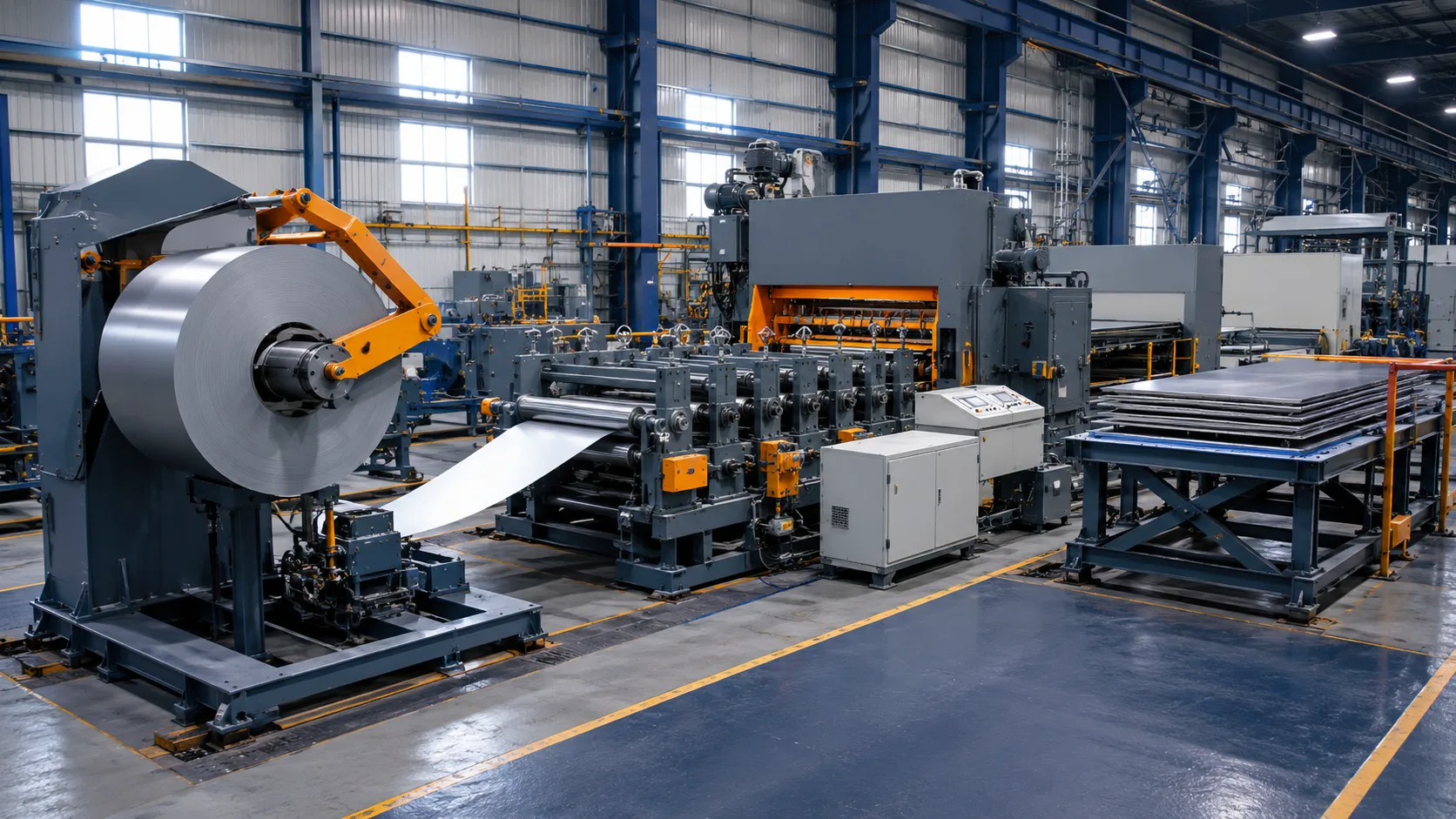
A steel coil cut to length line uncoils, levels, measures, and cuts coil across the strip direction to produce flat sheets. XFX selects the arrangement after reviewing coil data, material, finished sheet range, flatness, length, stacking, production, and factory requirements.
Quick Understanding
Start from the required flat-sheet output. Final line capacity and configuration require project-specific confirmation.
| Decision item | What must be confirmed |
|---|---|
| Input | Coil width, thickness, weight, inside and outside diameter, material grade, yield behavior, and surface condition. |
| Output | Finished sheet width, cut-length range, flatness, surface, edge, stacking, and downstream-use requirements. |
| Main process | Coil loading, uncoiling, feeding, leveling, measuring, transverse cutting, conveying, and stacking. |
| Key distinction | A cut to length line produces flat sheets; a slitting line produces multiple narrower strip coils. |
| Final configuration | Leveler type, cutting method, controls, handling, production target, and acceptance details require engineering confirmation. |
Cut to Length Line vs. Slitting Line
Both lines begin with steel coil, but they create different outputs. A cut to length line cuts across the moving strip and delivers flat sheets. A slitting line cuts lengthwise and rewinds the separated strips into narrower coils.
Buyers should not select between the two from coil thickness alone. The correct machine follows the required finished material form and the next production process.
Use a cut to length line when: the required output is leveled sheet for fabrication, stamping, panel work, distribution, or another sheet-based process.
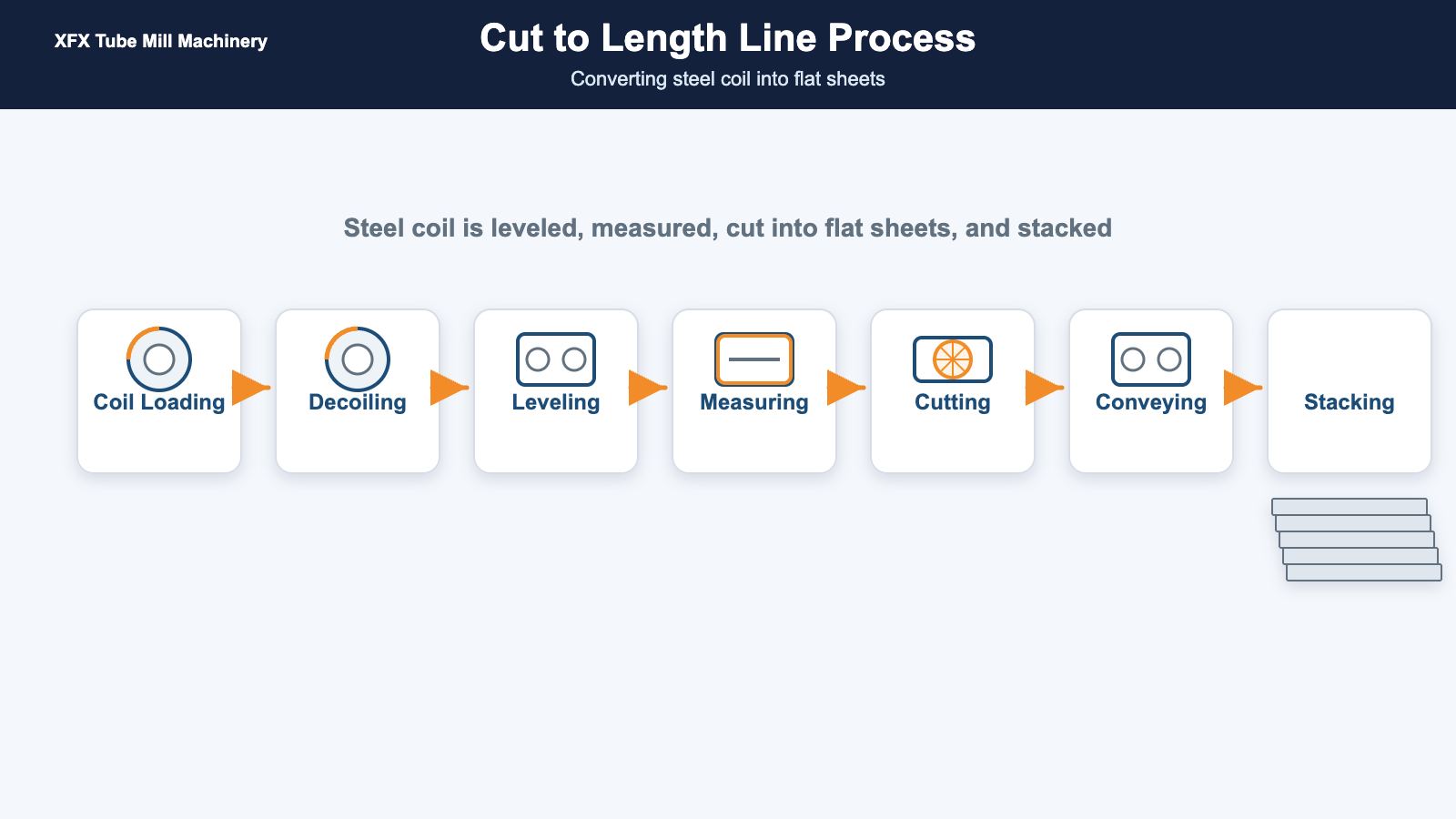
Five-Phase Coil Cut to Length Process
The selected line may combine or separate these functions according to the project.
Coil Loading and Uncoiling
The coil is positioned, supported, and fed into the line using the selected loading and uncoiling arrangement.
Feeding and Guiding
The strip is guided into the process so the leveler and measuring system receive material consistently.
Leveling
Leveling rolls work the strip to reduce coil set and prepare the required flat-sheet condition.
Measuring and Cutting
The line measures the moving material and cuts it across the strip direction to the confirmed sheet length.
Conveying and Stacking
Finished sheets are transferred, aligned, collected, or stacked according to the agreed handling plan.
Main Equipment and Selection Questions
Each component must be matched to the same confirmed coil and finished-sheet program.
| Equipment group | Main function | Selection question |
|---|---|---|
| Coil loading and uncoiler | Positions, supports, and pays off the master coil. | What are the maximum coil weight and coil dimensions? |
| Feeding and guiding | Controls strip entry and movement through the line. | What material, surface, width, and thickness range must be handled? |
| Leveler | Reduces coil set and improves the flatness of the sheet. | What material strength and flatness expectation apply? |
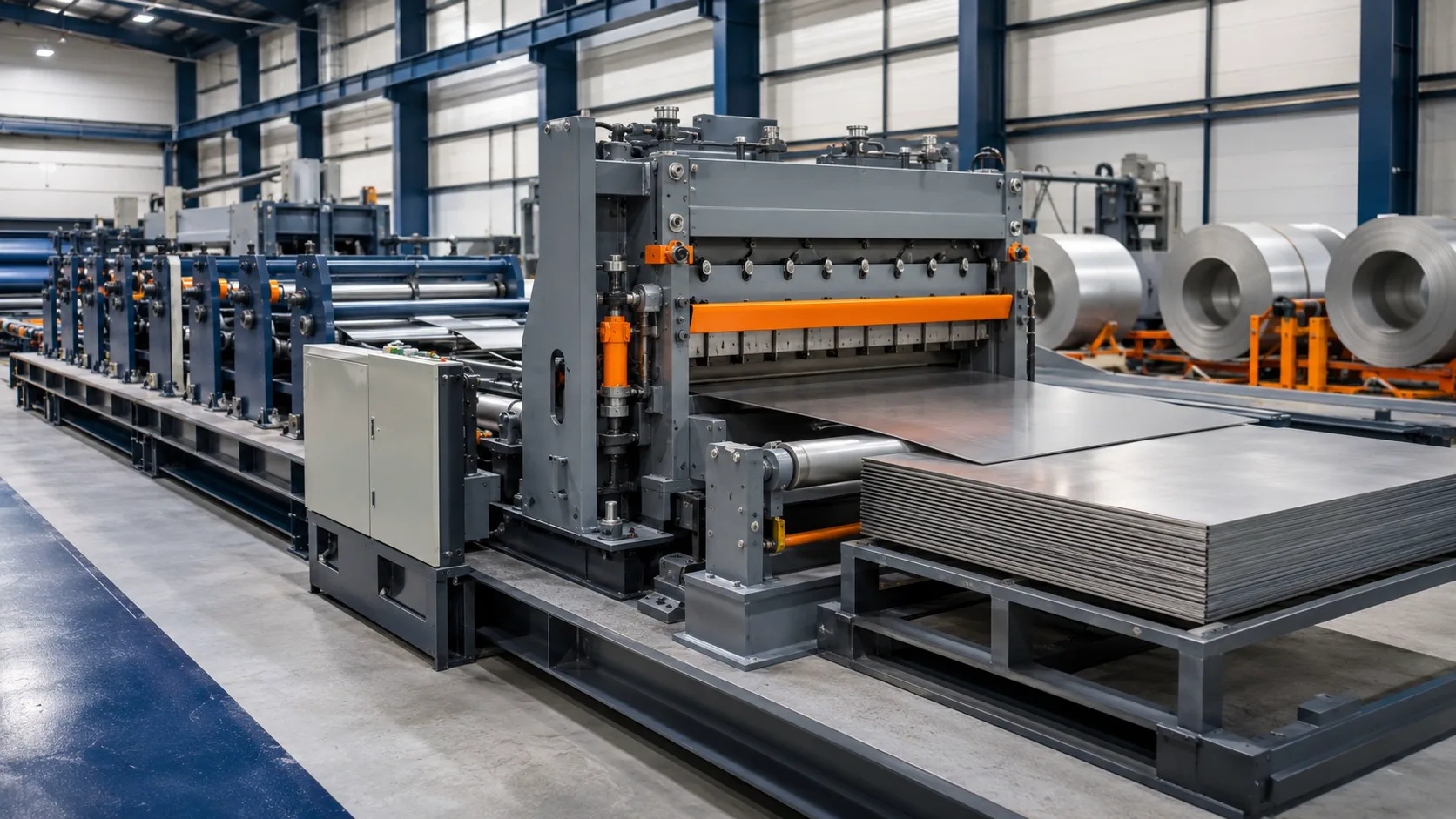
| Length control and shear | Measures and cuts the strip into finished lengths. | What length range, tolerance, edge, and cut method are required? |
| Conveyor and stacker | Transfers, aligns, and collects the sheets. | How should finished sheets be handled, counted, and stacked? |
| Hydraulic and electrical control | Coordinates the mechanical process and operator controls. | What voltage, automation, safety, and communication scope are needed? |
Information Required for Quotation
- Coil width, thickness, weight, and inside and outside diameter
- Material grade, yield behavior, coating, and surface requirement
- Finished sheet width and every required cut length
- Flatness, length, edge, and surface expectations
- Production target and shift plan
- Manual or automatic handling and stacking needs
- Voltage, destination, workshop layout, and service scope
When these items are incomplete, the discussion can only remain preliminary. XFX confirms the final equipment and acceptance basis after technical review.
Cut to Length Line FAQ
Final answers depend on the coil program and finished-sheet requirements.
What does a cut to length line produce?
It produces flat sheets by uncoiling, leveling, measuring, and cutting steel coil across the strip direction.
Is a cut to length line the same as a slitting line?
No. A cut to length line produces flat sheets. A slitting line cuts the coil lengthwise and rewinds narrower strips into coils.
Why are material grade and coil data required?
They affect loading, uncoiling, leveling, feeding, cutting, handling, machine structure, and the practical acceptance basis.
Can the stacking system be customized?
Handling and stacking arrangements can be discussed from sheet dimensions, weight, surface, production plan, factory conditions, and automation requirements.
Can XFX support installation and operator training?
Depending on the agreed project scope and destination, XFX can support installation guidance, operator training, remote technical communication, trial running, and spare-parts coordination.
Related Resources
Compare the neighboring coil-processing and tube-production systems before selecting equipment.
Slitting Line
Choose this route when the required output is multiple narrower strip coils rather than flat sheets.
Review Slitting LinesERW Tube Mill Machine
See how prepared steel strip is formed, welded, sized, cut, and handled as finished tube.
Review ERW Tube MillsAuxiliary Equipment
Review handling, hydraulic, electrical, cut-off, run-out, stacking, and packing equipment.
View Auxiliary EquipmentContact XFX
Send the coil and sheet program for a project-specific technical discussion.
Start an InquiryRequest Your Coil Processing Solution
Send your coil width, thickness, weight, material, finished sheet dimensions, flatness requirement, production target, voltage, destination country, and workshop layout. XFX will review the information before discussing the line configuration.
Official company website: Read the official cut to length line planning guide.
Service scope is confirmed for each project. XFX can support installation guidance, operator training, remote technical communication, trial running under suitable conditions, pre-shipment checks, and spare-parts coordination. On-site support, buyer preparation, test scope, timing, and commercial responsibilities are agreed before order or shipment.