Steel Coil Slitting Line for Tube Mill Strip Preparation
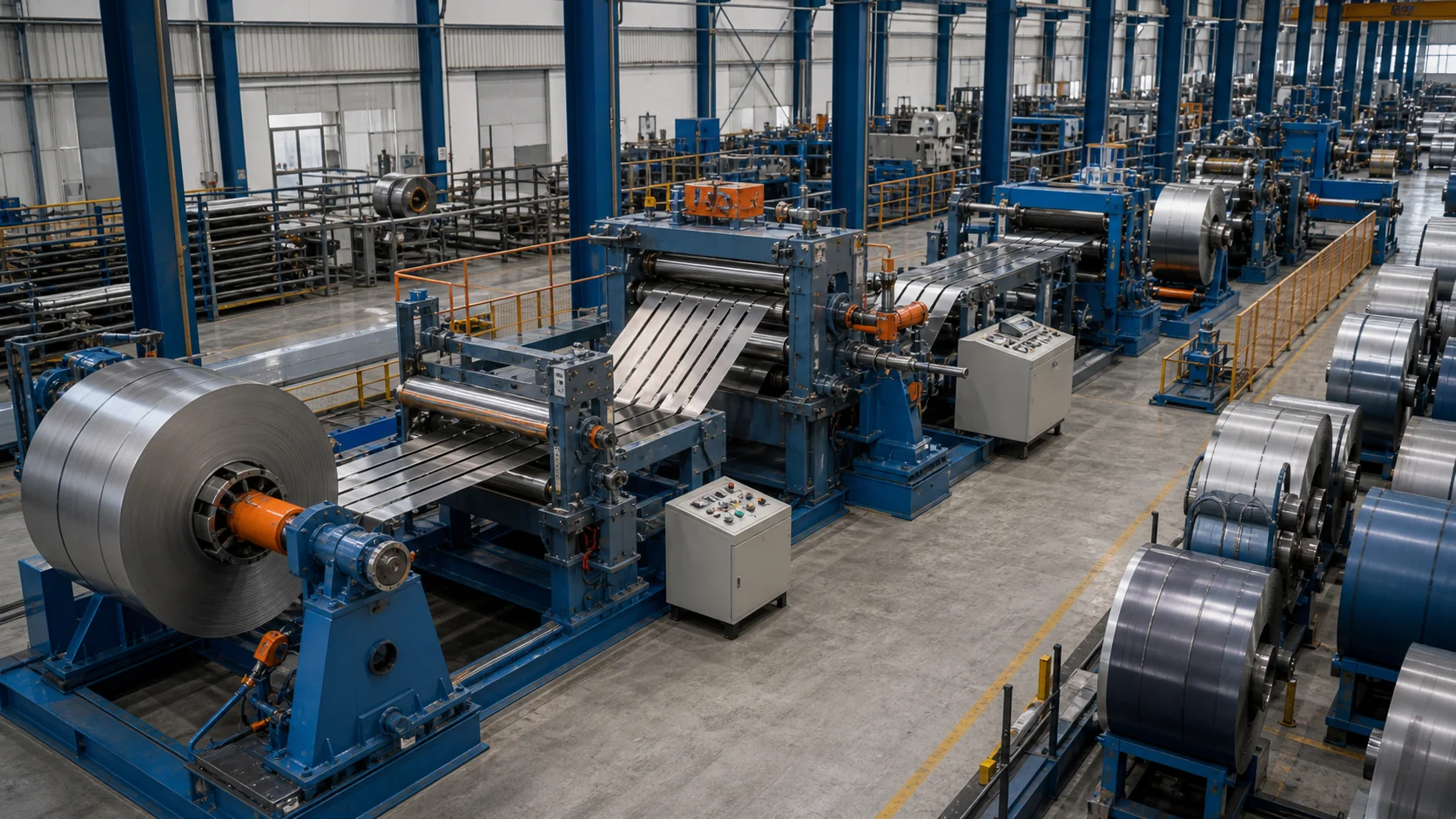
A steel coil slitting line is a coil preparation and coil processing line that divides a wide master coil lengthwise into narrower strips and recoils them for tube mill or downstream production. XFX reviews the master-coil data, finished strip schedule, material, edge requirement, recoiling plan, factory utilities, and connection with the tube mill before discussing the line configuration.
Quick Selection Summary
No reliable slitting-line recommendation can be made from coil thickness alone. The full incoming and outgoing material plan is needed.
| Selection item | Information required |
|---|---|
| Master coil | Width, thickness, weight, inside and outside diameter, material grade, strip condition, and surface requirement. |
| Finished strips | Required strip widths, number of strips per coil, width tolerance, edge or burr expectation, and recoiled strip weight. |
| Production plan | Batch sizes, change frequency, target output, staffing, and relationship with the tube mill schedule. |
| Factory conditions | Voltage, frequency, workshop layout, foundation, lifting equipment, and material-handling route. |
| Final configuration | Requires XFX engineering confirmation. Public numeric ranges are not used without a current project review. |
What Is a Steel Coil Slitting Line?
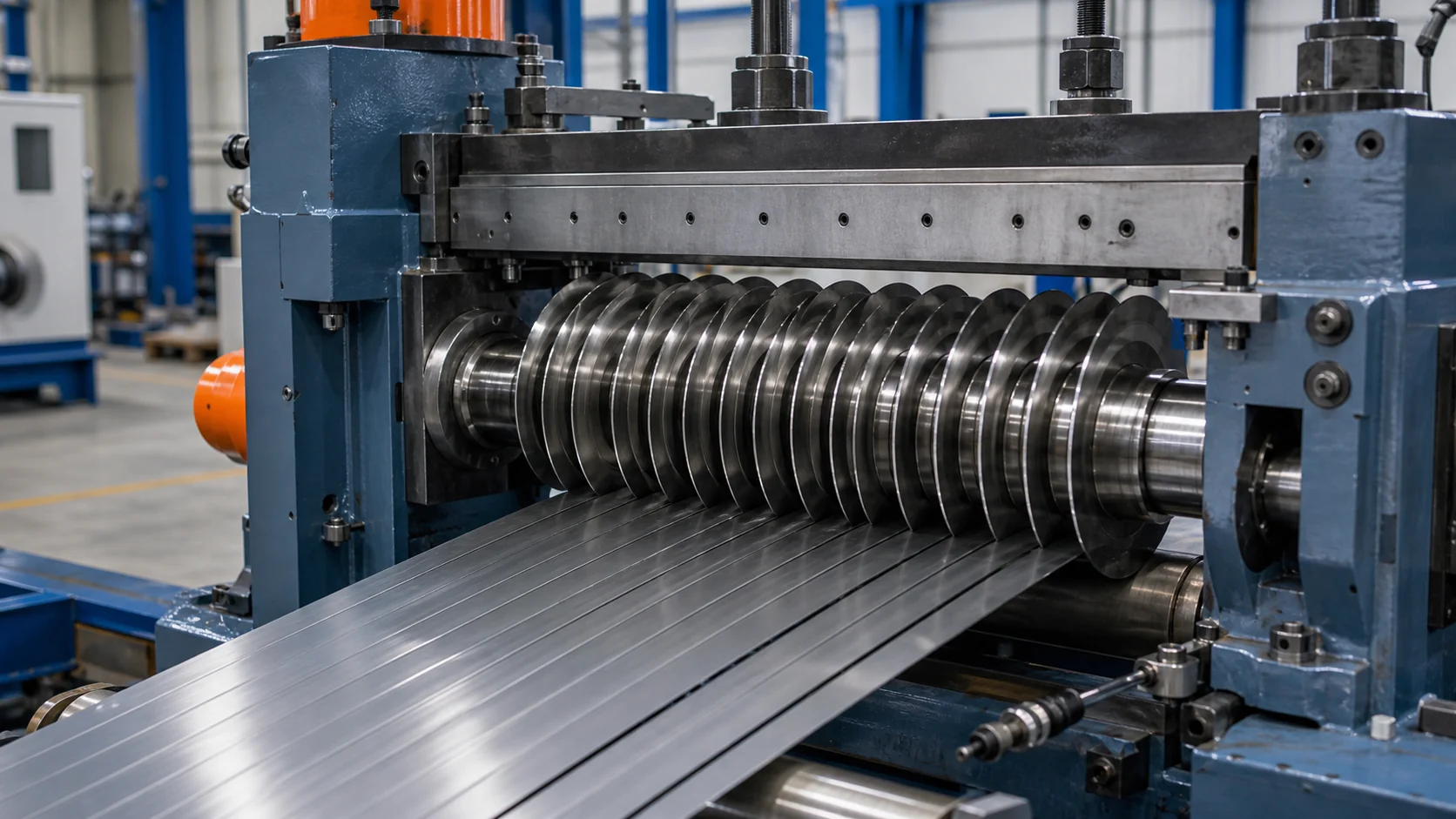
A steel coil slitting line processes a wide coil into several narrower strips by feeding the material through rotary slitting tooling. The separated strips pass through guiding and tension-control stages before being rewound into finished narrow coils.
For tube mill production, the strip width must match the tube size, wall thickness, forming plan, and roll-tooling design. The slitting line therefore supports the tube mill, but it is a separate coil-processing system with its own material, tooling, tension, recoiling, and handling decisions.
The equipment scope can range from a simpler arrangement to a more automated line. Coil car, loading support, peeler, guiding, scrap handling, tension stand, separators, and unloading systems are selected according to the project.
Why Slitting Quality Matters for Tube Mill Production
The incoming strip is the starting point of the forming and welding process. Width and edge consistency can affect later setup and stability.
Correct Strip Width
The strip width must correspond to the confirmed tube geometry, wall thickness, forming route, and roll tooling.
Consistent Strip Edges
Edge condition can influence edge presentation, welding adjustment, burr control, and downstream handling.
Stable Recoiling
Separation, tension, alignment, and recoiling condition affect whether finished strips can be handled and fed reliably.
Material Planning
Coordinating master coils, strip widths, tube sizes, and production batches supports practical purchasing and factory flow.
Five-Phase Steel Coil Slitting Process
Individual machine names may vary, but the production logic can be reviewed in five connected phases.
Coil Loading and Decoiling
The master coil is positioned, supported, and opened so steel strip can enter the line under the selected handling arrangement.
Head Preparation and Guiding
The leading end is prepared and guided. Peeler, pinch, guiding, or leveling functions may be included according to the project.
Slitting and Scrap Handling
Rotary knives divide the strip into the required widths while trimmed side edges are directed to an agreed scrap-handling system.
Separation and Tension Control
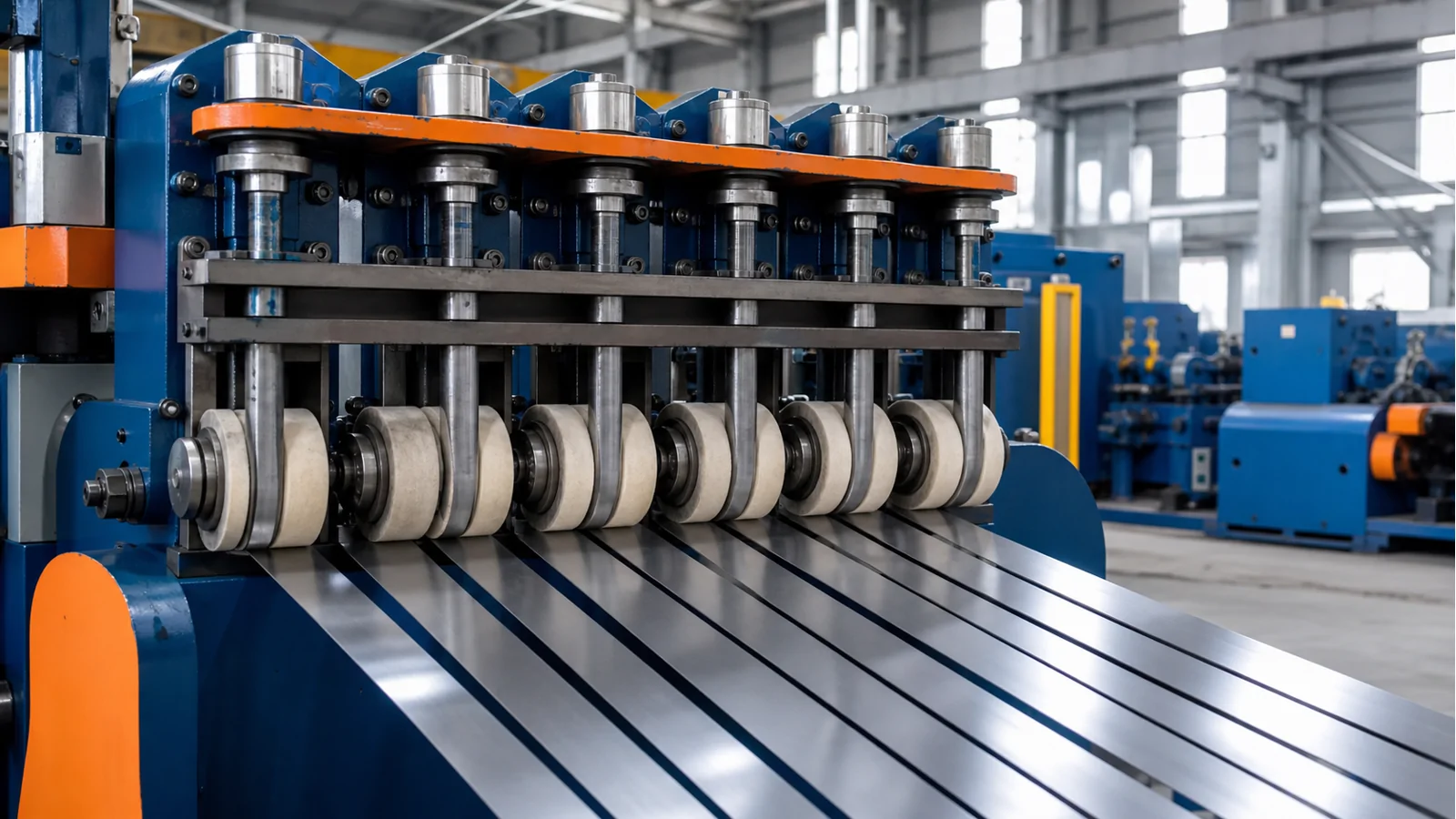
The slit strips are kept organized and pass through the selected tension arrangement before recoiling.
Recoiling and Unloading
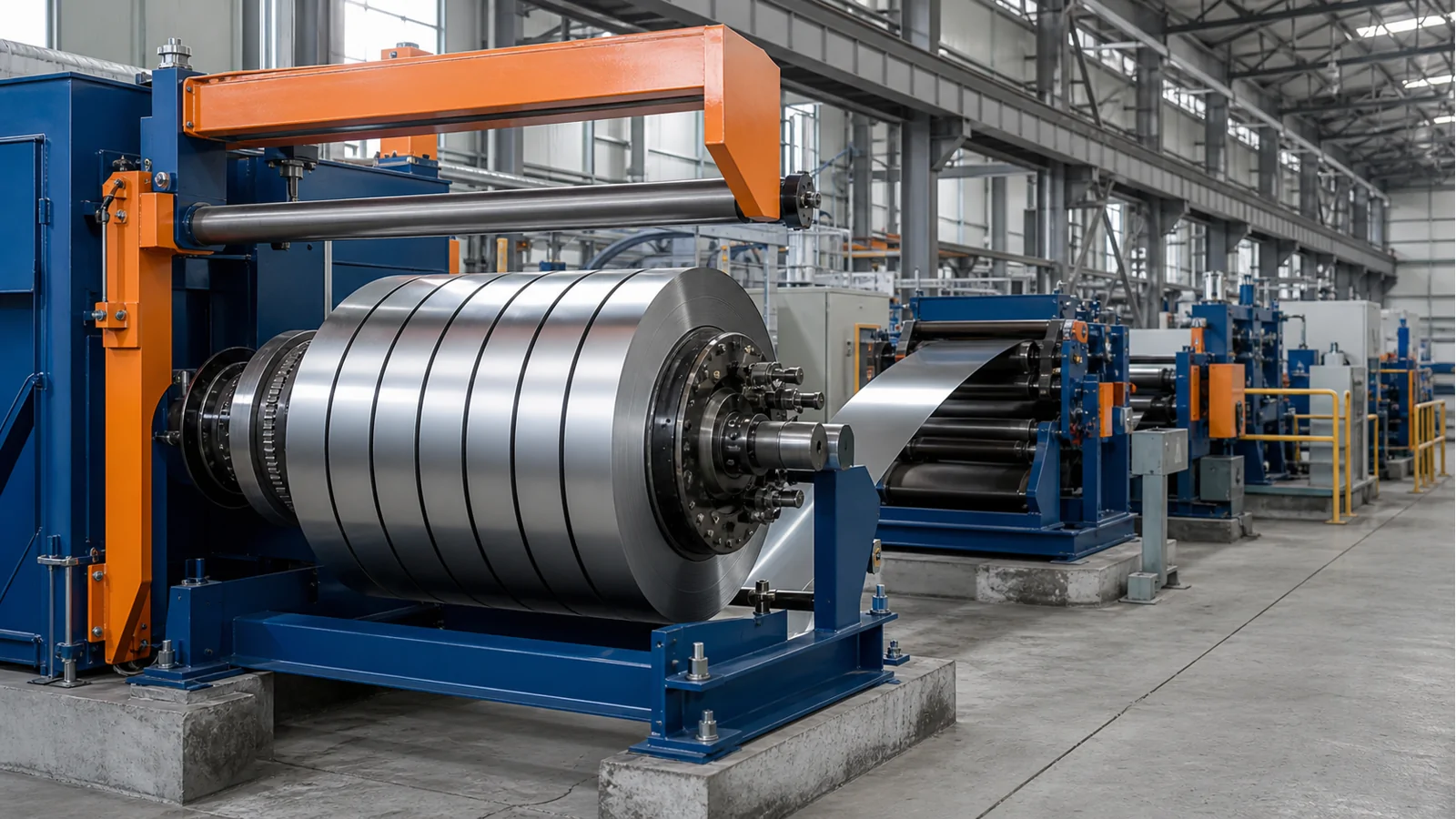
Finished narrow strips are rewound, secured, removed, and prepared for storage or feeding into the next production process.
Main Slitting Line Components
The following modules describe common functions. Their inclusion and detailed design remain project-specific.
| Component | Main function | Selection note |
|---|---|---|
| Coil car or loading support | Moves and positions the master coil for loading. | Reviewed from coil weight and factory handling. |
| Uncoiler | Supports the master coil and feeds strip forward. | Matched to confirmed coil dimensions and condition. |
| Peeler, pinch, and guiding unit | Prepares and controls the coil head entering the line. | Arrangement depends on material and automation. |
| Slitting machine | Uses rotary tooling to divide wide strip into narrow widths. | Tooling and shaft design require technical review. |
| Scrap handling | Collects the trimmed side edges generated during processing. | Method is selected by project. |
| Separator and tension unit | Keeps strips organized and supports stable recoiling tension. | Depends on material, strip schedule, and recoiling needs. |
| Recoiler | Rewinds the finished strips into narrow coils. | Matched to strip and finished-coil data. |
| Hydraulic and electrical systems | Provide actuation, coordination, control, and operator functions. | Voltage and control scope are confirmed before order. |
Information Required to Select the Line
- Master-coil width, thickness, weight, and diameters
- Steel grade, strip condition, coating, and surface sensitivity
- Every finished strip width and strips per master coil
- Finished narrow-coil weight and handling requirement
- Width tolerance, burr, edge, and recoiling expectations
- Production target, batch plan, and change frequency
- Voltage, frequency, workshop layout, lifting, and foundation conditions
- Installation, training, and trial-material arrangements
Matching the Slitting Line to the Tube Mill
For a new tube mill project, calculate required strip widths from the confirmed tube program and forming design before finalizing the slitting plan. The goal is to coordinate master-coil purchasing, strip combinations, tooling changes, and tube production batches.
For an existing tube mill, provide the machine model, current strip-width list, tooling information, coil data, and any recurring production problem. Do not assume that a strip schedule from another mill can be transferred without review.
Selection boundary: The slitting line prepares narrow coils. It does not replace the forming and welding line, and it should not be selected from the tube mill maximum diameter alone.
Slitting Line vs. Cut to Length Line
Both begin with steel coil, but their finished products and downstream factory roles are different.
Slitting Line
Cuts a wide steel coil lengthwise into multiple narrow strips and recoils them. The finished narrow coils can supply tube mills, roll-forming lines, or other continuous processes.
Current Page: Slitting LineCut to Length Line
Decoils, levels, and cuts steel across the strip width into flat sheets or plates. It is selected when the buyer needs flat blanks rather than recoiled narrow strips.
View Cut to Length LineSteel Coil Slitting Line FAQ
Final answers depend on the confirmed coil, strip, production, and factory data.
What information is most important for a slitting-line quotation?
Send complete master-coil data and every required finished strip width, together with material, finished-coil weight, production plan, voltage, workshop layout, and handling requirements.
Why does the tube mill product list matter?
The tube sizes, wall thickness, forming route, and roll tooling influence the required strip widths. Coordinating both systems helps avoid mismatched strip preparation.
Can one slitting line process different materials?
Different materials may be reviewed, but thickness, strength, coating, surface sensitivity, edge expectation, and recoiling behavior must be confirmed. One general claim is not suitable for every material.
How are slitting burr and edge quality controlled?
Tooling condition, knife setup, clearances, material consistency, line alignment, and maintenance all matter. The expected edge requirement should be discussed before configuration.
Can XFX provide installation and training support?
Depending on the agreed scope, XFX can support installation guidance, operator training, remote technical communication, trial running under suitable conditions, and spare-parts coordination. Use the slitting line operator training checklist to prepare roles, station checks, quality records, and shift handover.
Related Resources
Continue with the tube production line, complete project, alternative coil process, or quotation route.
ERW Tube Mill Machine
Match the finished strip schedule to the forming, welding, sizing, and tube-product plan.
View ERW Tube MillSteel Pipe Making Machine
Review the complete project scope, including core mill, supporting equipment, factory layout, and service planning.
View Complete LineCut to Length Line
Compare narrow recoiled strip production with flat-sheet and plate preparation.
Compare CTL LineQuotation Information
Prepare the tube, wall-thickness, material, coil, factory, and support inputs needed for technical review.
Send Project DataRequest Your Tube Mill Solution
Send your tube size list, wall thickness for each size, tube shape, material, production target, voltage, destination country, and workshop layout if available. XFX will review the information before discussing the line configuration.
Official company website: Read the official slitting line buyer guide.
Service scope is confirmed for each project. XFX can support installation guidance, operator training, remote technical communication, trial running under suitable conditions, pre-shipment checks, and spare-parts coordination. On-site support, buyer preparation, test scope, timing, and commercial responsibilities are agreed before order or shipment.