Steel Pipe Making Machine and Complete Welded Pipe Production Line
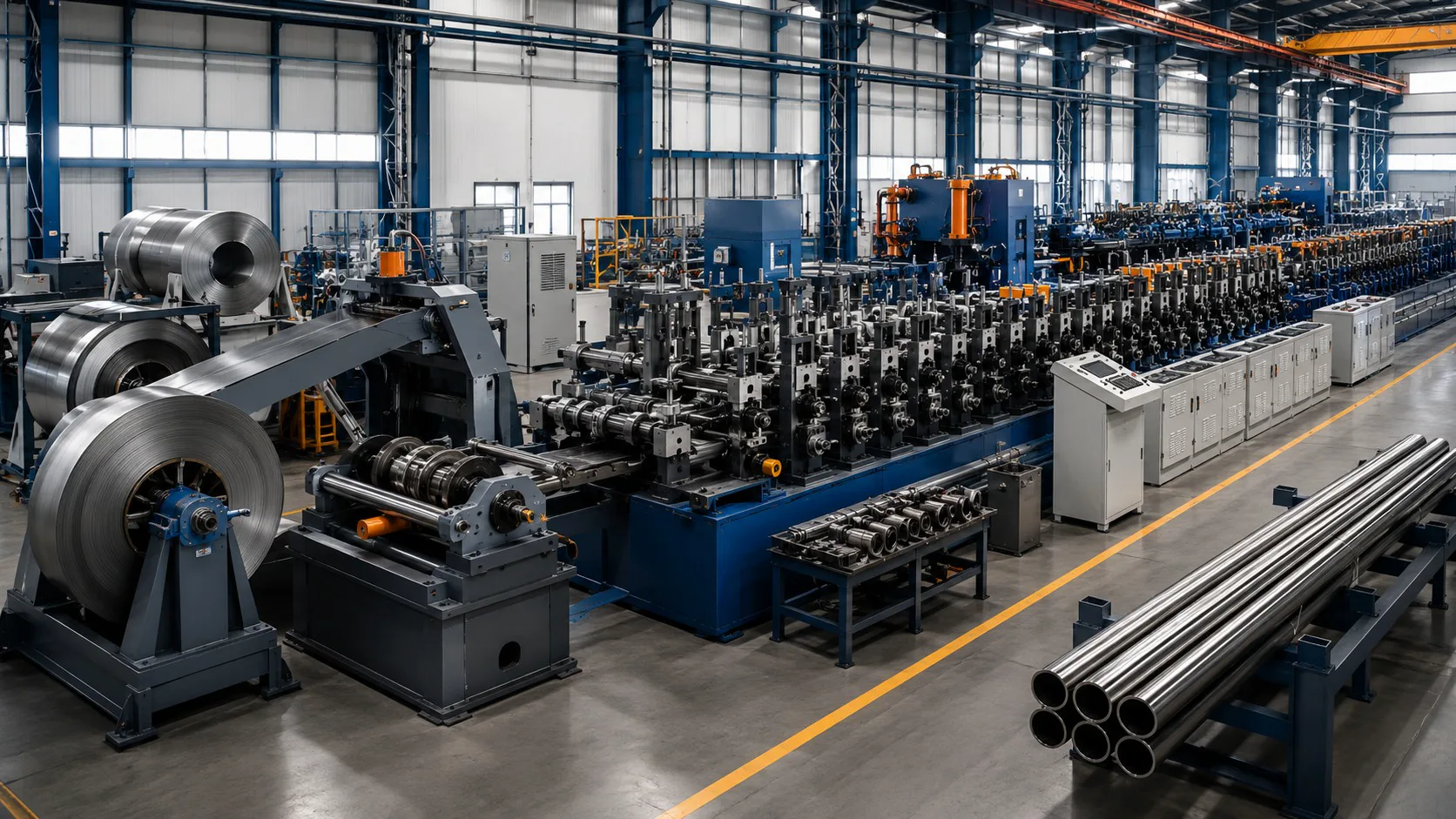
XFX uses the term steel pipe making machine for the broader production project: the core ERW tube mill plus the strip-preparation, roll-tooling, cutting, handling, packing, layout, utility, installation, and support decisions needed around it.
Project Quick Brief
A complete-line quotation should define the finished pipe program, the equipment boundary, the factory conditions, and the support responsibility.
| Planning item | What must be confirmed |
|---|---|
| Finished products | Tube sizes, wall thickness for each size, shapes, material, lengths, and application requirements. |
| Core production line | Forming, high frequency welding, cooling, sizing, cutting, and run-out arrangement. |
| Supporting scope | Slitting, roll tooling, accumulation, handling, finishing, packing, and other project-dependent equipment. |
| Factory conditions | Voltage, frequency, workshop dimensions, foundation, lifting, utilities, staffing, and material flow. |
| Service scope | Installation guidance, operator training, trial conditions, remote support, and spare-parts coordination as agreed. |
What Is a Complete Steel Pipe Making Machine Project?
An ERW tube mill is the core process that forms, welds, sizes, and cuts steel tube. A steel pipe making machine project is the wider factory solution considered by owners, purchasing managers, traders, and investors who must also prepare strip, tooling, utilities, handling, layout, installation, and production support.
This broader definition is useful because a technically suitable mill can still create project problems if the incoming strip widths, crane route, electrical supply, finished-pipe flow, or packing method are not considered early.
XFX reviews the confirmed product schedule and the intended factory conditions before discussing the practical scope. No standard package should be assumed to include every auxiliary machine.
Complete Line Scope
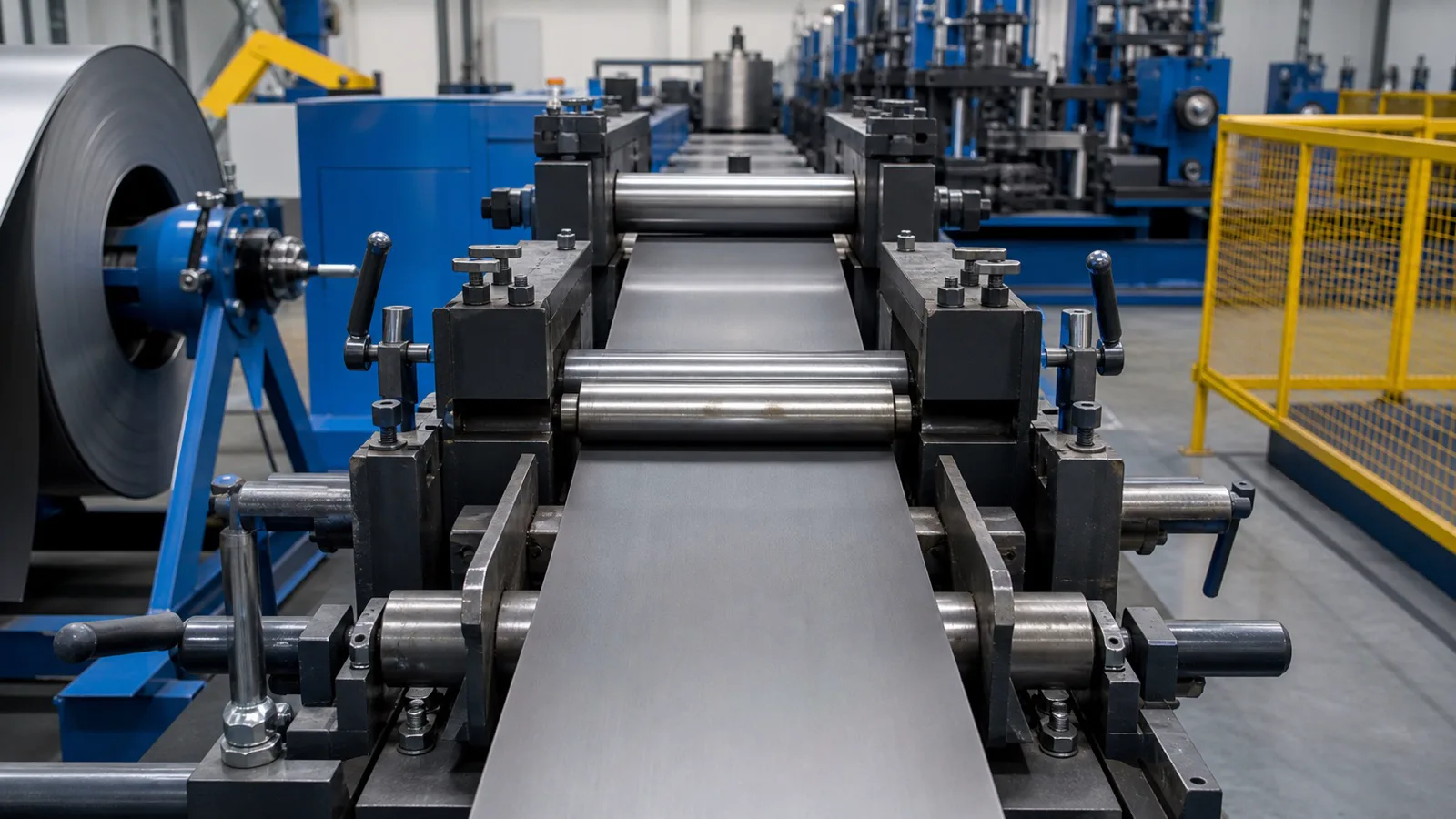
The project may include the following modules. The final supply boundary is defined in the technical proposal and contract.
| Module | Main purpose | Project note |
|---|---|---|
| Slitting line | Prepares narrow steel strips from a wider master coil. | Selected from coil data, strip schedule, and production plan. |
| Uncoiler and strip preparation | Supports the coil, feeds strip, and may prepare or join strip ends. | Configuration depends on coil handling and continuity requirement. |
| Accumulator | Stores strip between coil preparation and the forming mill. | Type and storage requirement are confirmed by project. |
| Forming and HFW mill | Forms strip and produces the continuous longitudinal weld seam. | Machine, tooling, and welding system follow the product schedule. |
| Cooling and sizing | Controls temperature, final dimensions, and tube shape. | Matched to round, square, or rectangular requirements. |
| Flying cut-off | Cuts the continuous tube to the required finished length. | Method depends on tube and production conditions. |
| Run-out and handling | Transfers, collects, or moves cut pipes for the next step. | Manual and automated options can be reviewed. |
| Packing or stacking | Organizes finished pipes for storage or shipment. | Included only when confirmed in the project scope. |
| Roll tooling and auxiliaries | Supports product changes, finishing, control, or production flow. | Prepared from confirmed machine and product data. |
Four Production Phases
Grouping the process into four phases makes equipment responsibility and factory flow easier to review.
Coil and Strip Preparation
Master coil handling, slitting if required, uncoiling, guiding, leveling, strip-end preparation, and accumulation are coordinated before forming.
Forming and Welding
Roll stands form the strip, the high frequency welding section joins the prepared edges, and seam treatment may be applied where required.
Cooling, Sizing, and Cutting
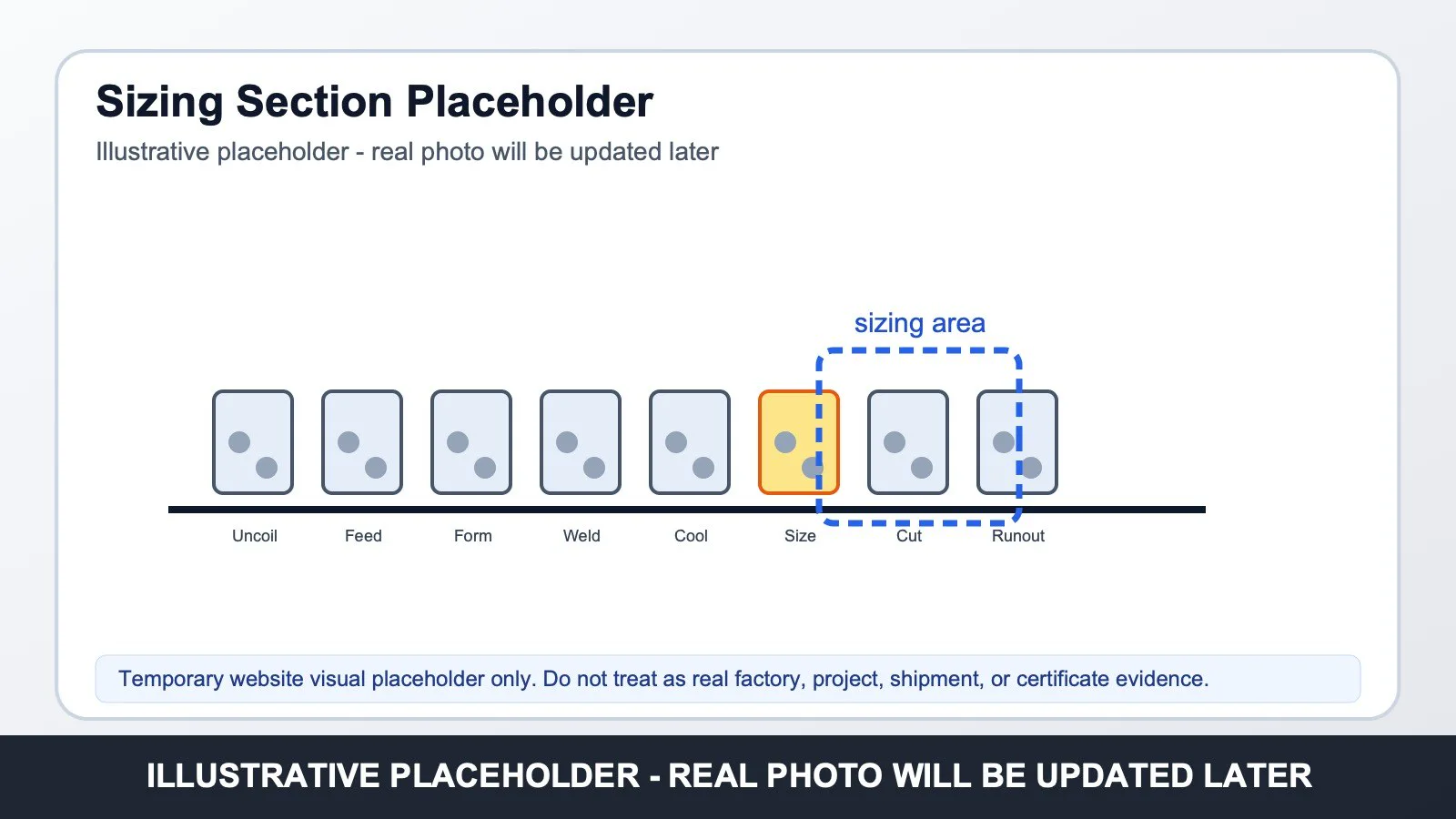
The tube is cooled, dimensionally controlled, shaped when applicable, straightened by the selected arrangement, and cut to length.
Run-Out and Finished-Pipe Handling
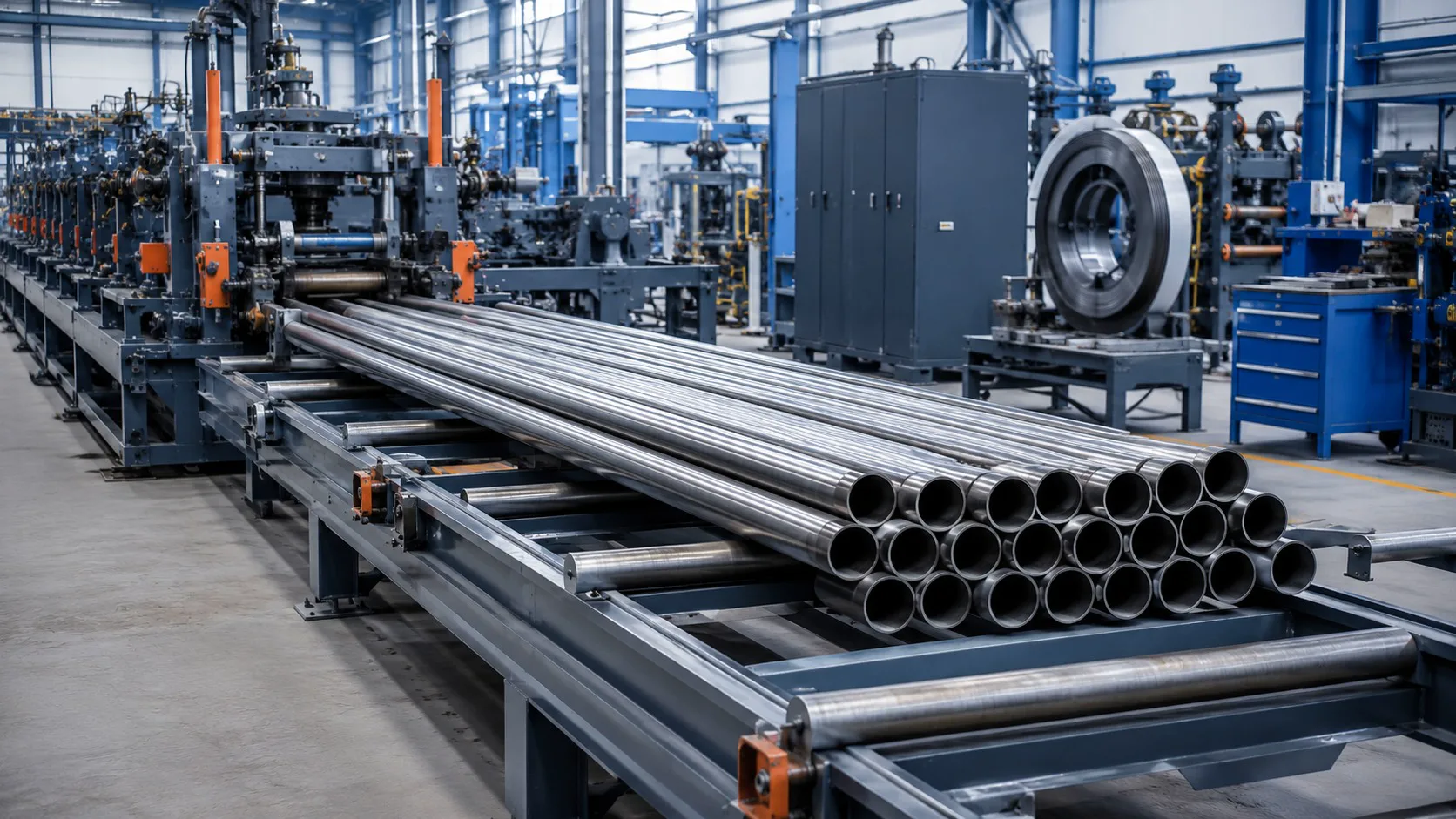
Cut pipes move to collection, inspection, finishing, stacking, or packing according to the agreed automation and factory flow.
Factory and Utility Planning Before Purchase
The machine model is only one part of a successful production-line plan. Confirm how raw coils enter the building, how strips and tooling are stored, how operators access the line, how finished pipes leave the run-out area, and where inspection and packing will occur.
Electrical supply, water or cooling arrangements, compressed air if used, lifting equipment, foundation conditions, workshop clearance, and maintenance access should be reviewed before final layout approval.
Do not size the project from the largest tube alone. The practical order mix, wall thickness, material, change frequency, shift plan, and downstream handling can change the recommended line and factory arrangement.
Information needed for a complete proposal
- Full tube size and matching wall-thickness list
- Round, square, and rectangular product mix
- Material grades, strip condition, and coil data
- Production target, cut lengths, and shift plan
- Incoming material and finished-pipe handling method
- Voltage, frequency, utilities, and workshop drawing
- Desired automation and packing level
- Destination and installation or training requirements
Model Selection and Project Delivery
Choose the model family only after the finished-pipe program is clear, then define the supporting equipment and delivery responsibilities around that decision.
Model and Tooling Review
Compare the size-by-thickness schedule with individual FX model references, material behavior, forming route, roll tooling, and cutting requirement.
Open Model SelectionManufacturing and Inspection
Confirmed in-house work can include mechanical design, machine-frame and line assembly, some fabrication, adjustment, and trial running. Inspection scope is agreed by project.
About XFXInstallation and Production Support
XFX can support installation guidance, operator training, remote communication, trial running under suitable conditions, and spare-parts coordination when included in the agreed scope.
Review Project WorkflowSteel Pipe Making Machine FAQ
These answers cover complete-project planning rather than only the core mill.
What is included in a steel pipe making machine line?
The core line commonly covers forming, high frequency welding, cooling, sizing, cutting, and run-out. Strip preparation, accumulation, roll tooling, packing, finishing, and other auxiliaries depend on the agreed project scope.
Is a steel pipe making machine different from an ERW tube mill?
ERW tube mill normally emphasizes the core forming and resistance-welding line. Steel pipe making machine is a broader buyer term that may include the complete production project and supporting factory decisions.
Can one line produce round, square, and rectangular products?
It may be possible when the forming route, sizing arrangement, tooling, size combination, wall thickness, and material are suitable. The complete product schedule must be reviewed first.
Can XFX help with the workshop layout?
XFX can discuss line arrangement and machine-configuration suggestions using the available workshop dimensions, utilities, material route, lifting plan, and finished-pipe flow. Final civil and utility design remains subject to the agreed responsibility.
What support can be discussed for installation?
Depending on the destination and contract, XFX can provide installation guidance, operator training, remote technical communication, trial-running support under suitable conditions, and spare-parts coordination.
Related Resources
Continue from complete-project planning to the core mill, strip preparation, model choice, or project workflow.
ERW Tube Mill Machine
Review the core forming, welding, sizing, cutting, and model-selection logic for welded tube production.
View ERW Tube MillSlitting Line
Understand how master coils are converted into the strip widths needed for the tube mill.
View Slitting LineFX Model Selection
Compare individual FX models using the full size-by-thickness list and practical order mix.
Compare ModelsProject Workflow
Review how requirements, configuration, production, QC, delivery, and installation support are organized.
View ProjectsPlanning tubes in the 1-3 mm wall-thickness range? Review the steel pipe machine selection guide for 1-3 mm production before confirming the model.
Request Your Tube Mill Solution
Send your tube size list, wall thickness for each size, tube shape, material, production target, voltage, destination country, and workshop layout if available. XFX will review the information before discussing the line configuration.
Official company website: View official steel pipe production line information.
Service scope is confirmed for each project. XFX can support installation guidance, operator training, remote technical communication, trial running under suitable conditions, pre-shipment checks, and spare-parts coordination. On-site support, buyer preparation, test scope, timing, and commercial responsibilities are agreed before order or shipment.