How to Choose a Tube Mill Machine for Steel Pipe Production
Choosing a tube mill machine starts with the finished pipe you want to produce, not with a model name alone.
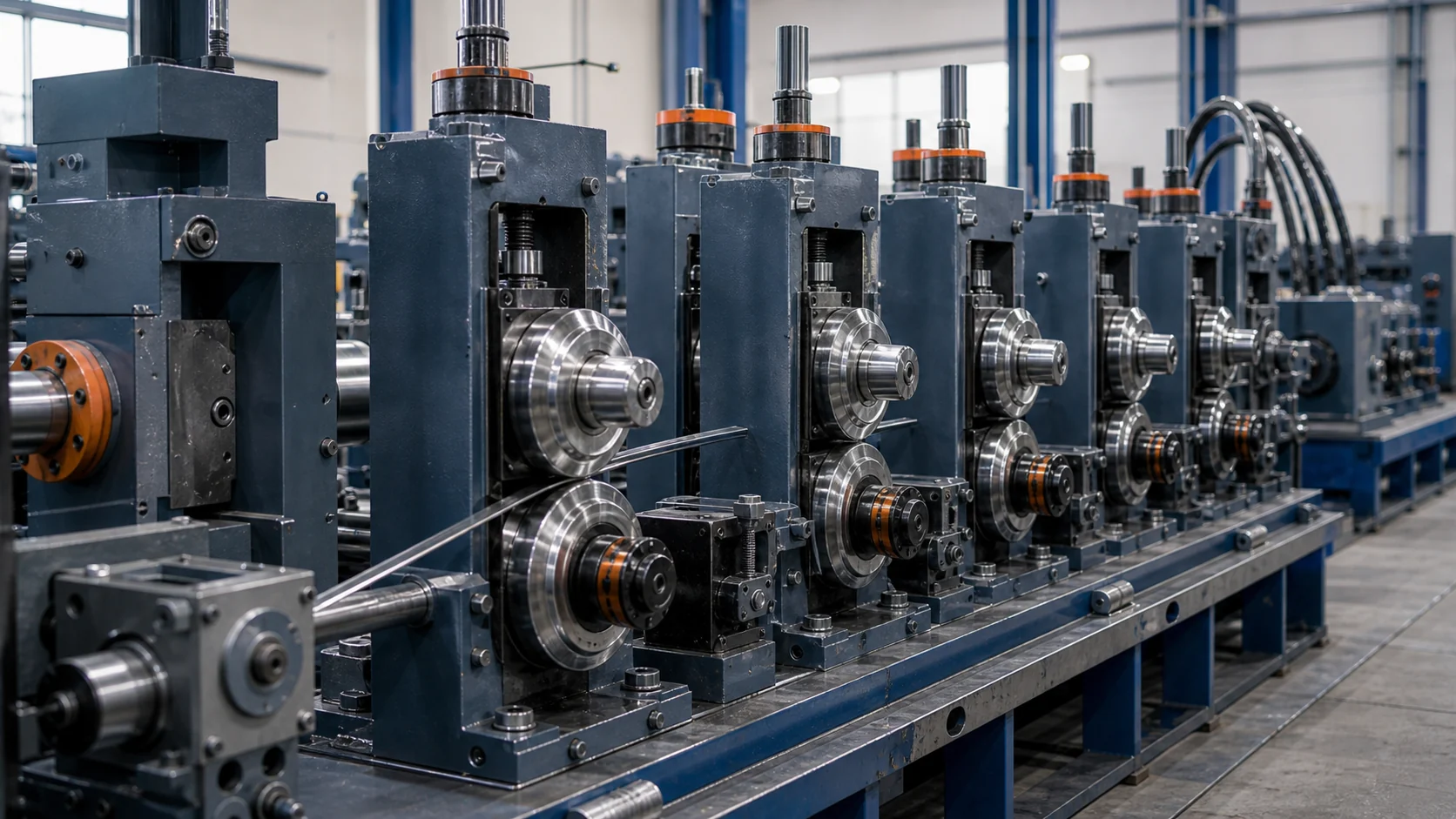
Start with the Pipe You Want to Sell
The correct tube mill machine is selected according to the finished tube, not according to a model number alone. Before comparing machines, list the round pipes, square tubes and rectangular tubes you want to produce. Add wall thickness for every size, because a tube size without wall thickness is not enough for machine selection.
For example, a buyer planning furniture tubes may focus on smaller sizes, surface quality and efficient size changes. A buyer producing construction tubes may need stronger forming, stable welding and more attention to cutting. The product market should guide the machine selection.
Confirm Wall Thickness for Every Size
Wall thickness affects almost every important part of the line: forming roll design, machine frame strength, welding power, squeeze roll adjustment, cooling, sizing and flying saw cutting. Two buyers may both ask for a 32mm tube, but one may need 0.8mm wall thickness and another may need 2.5mm. These are different technical discussions.
When you send an inquiry, prepare a table with tube size, wall thickness, tube shape and material. This reduces repeated communication and helps XFX review the model range faster.
Compare Practical Model Directions
If your product range is small and thin-wall, begin with the FX28 tube mill. If your pipe range needs stronger medium-small production, compare the FX45 tube mill. If you need medium size pipes or thicker wall production, review the FX60 tube mill. These pages help buyers understand model direction, but final configuration still requires engineering confirmation.
| Buyer Question | Why It Matters |
|---|---|
| What pipe sizes will be produced? | Decides machine model range and tooling plan. |
| What wall thickness for each size? | Decides strength, welding and cutting requirements. |
| What material? | HR, CR and GI may require different processing consideration. |
| What factory voltage and layout? | Affects electrical configuration and installation planning. |
Do Not Ignore Support
For overseas steel pipe factories, machine support is part of the buying decision. Ask whether the manufacturer can provide layout discussion, installation guidance, operator training, remote troubleshooting and spare parts support. A tube mill line requires adjustment during installation and production startup, so communication after delivery matters.
Check the Complete Product System
A tube mill project may also need tube mill rolls, slitting line or auxiliary equipment. If steel strip preparation is not available locally, slitting equipment may be part of the investment plan. If many tube sizes are required, tooling preparation should be discussed early.
Recommended Selection Process
- Confirm your market and first product range.
- Prepare tube sizes and wall thickness for each size.
- Confirm material, capacity target and voltage.
- Review the Products page and relevant model pages.
- Send the information through the Contact page for technical review.
Questions to Ask Before Choosing a Supplier
After you narrow the model range, compare suppliers by technical communication, not only by price. Ask how the supplier confirms wall thickness, how roll tooling is designed, what information is needed before quotation, and how installation support is arranged. A good supplier should ask detailed questions because tube mill selection depends on the real production plan.
Also ask whether the supplier can explain the difference between small, medium and larger model ranges. If every inquiry receives the same answer, the selection process may be too general. A factory producing light furniture tubes does not need the same discussion as a factory producing structural tubes for construction projects.
How to Use Model Pages Correctly
Model pages are useful for orientation, but they should not replace engineering review. Use the model pages to understand approximate direction, then send the actual tube size list. If your smallest and largest sizes are far apart, one line may not be the best solution. In some cases, using two lines can improve production stability and reduce adjustment time.
Buyers should also check local operator experience. If the factory does not have experienced tube mill technicians, installation guidance, training and remote support become more important. Before ordering, confirm who will install the line, who will train operators, and how spare parts will be supplied later.
The final decision should combine product demand, technical suitability, factory space, budget, support plan and future market direction. This gives the buyer a more reliable basis than choosing a model only by maximum pipe diameter.
Final Selection Reminder
If two models both appear possible, do not decide only by the larger machine name. Ask the supplier to compare adjustment convenience, tooling cost, welding stability, operator training and future size expansion. This gives the buyer a clearer technical reason for the final choice.
Send Your Tube Size
Send your tube size, wall thickness, material, capacity target and destination country. XFX will review the information and recommend a practical tube mill solution before quotation.
Send InquiryWhatsApp Now